

Foreign Language Videos
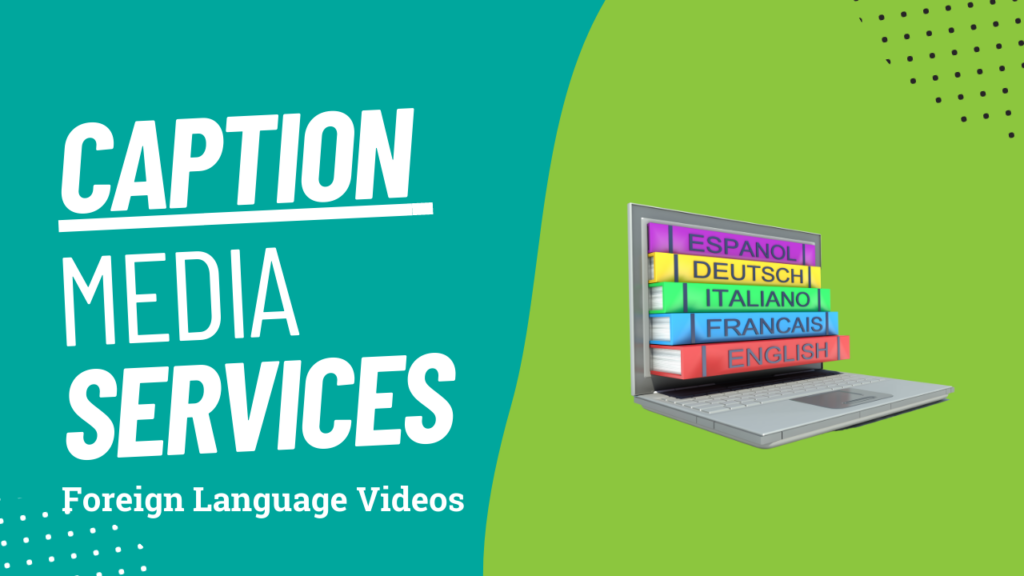
When the language of a video is primarily spoken in a foreign language, the equivalent accessible version would reflect captions in the same foreign language and should not be translated into English. For example, a deaf student is taking a Spanish course that has practice videos of individuals speaking Spanish. These videos should be captioned in Spanish for accessibility purposes.
Automatic Captions
Effective communication is the required standard to ensure qualified individuals with disabilities have equitable communication access. Access to accurate information in lectures, discussions and across other rigorous courses is essential for deaf students. Therefore, it is imperative that quality captions are provided to deaf students for media used in courses and around campus.
Captioning In House vs. Outsourcing
NDC’s Creating Offline Captions summarizes the three main ways that institutions are ensuring media on campus is accessible by Finding captioned media or comparable media: Searching for the same video that already captions or if a similar video that is captioned can be used.
Captioning Policies & Procedures
Campus policies and procedures for captioned media is recommended as a proactive measure to support a consistent and streamlined process. Many institutions are moving toward ensuring that all media be captioned, whether or not a deaf individual has made a request. Such a policy would help reduce the need for last minute requests and maximize access for everyone.
Copyright & Compliance
Colleges and universities must ensure media is accessible to deaf individuals whether it is media for coursework (supplementary or required), videos posted on the institution’s website or social media, or other materials such as those available through the campus library. This also includes videos used for educational purposes that are not captioned by the original production company.
Quality Standards for Captions
When going through the process of captioning videos, whether done in-house or through a third-party vendor, it is important to consider the quality standards of captioning. There are several resources that identify industry standards on captioning media such as:
Captions Benefit Everyone
There is evidence-based research in support of using captioned media without the need to specifically make a request. Captions benefit everyone, and can dramatically improve one’s ability to retain and recall information from videos.
Healthcare Major: Do you disclose your disability when applying for school or work?
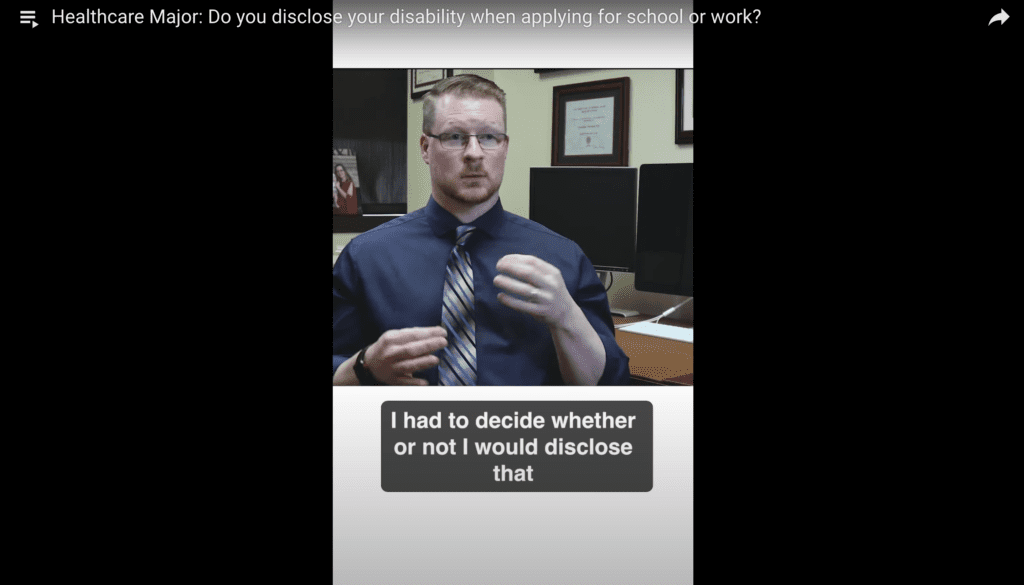
I had to decide whether or not I would disclose that I was Deaf during the application process. I had to put a lot of thought into my essay. From my resume or CV, it was pretty clear that I was Deaf. My research interests, and the community I was involved with, implied I was Deaf.
Tips for Deaf Students: Working with Interpreters (Part 1)
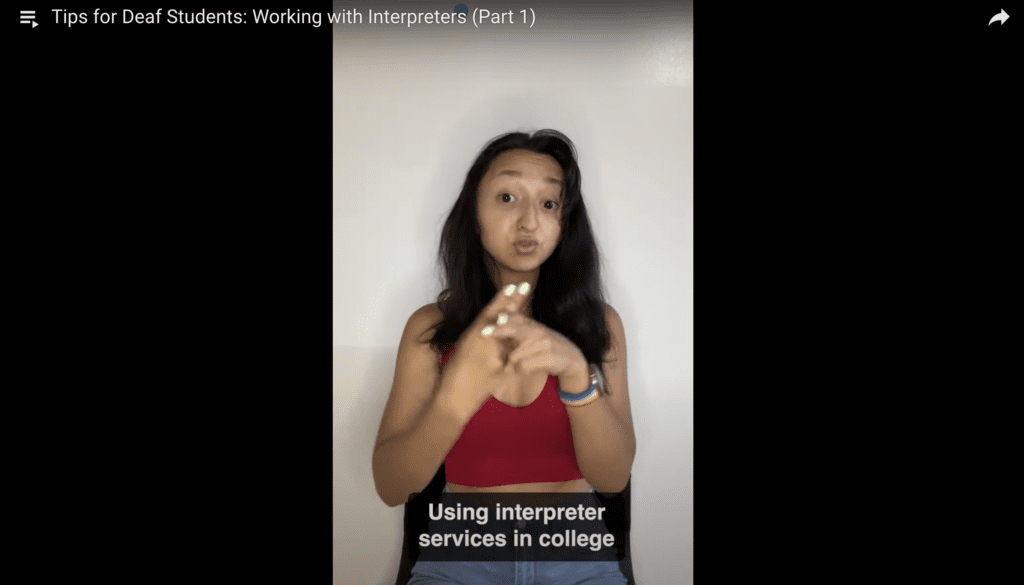
Using interpreter services in college might be different in other situations. In college you are responsible for planning your own accommodations. Your school might have its own rules for how to request interpreters. Ill show you some tips on how to request interpreters in college.
Tips for Deaf Students: Planning Your College Visits

Visiting colleges can help you make smart decisions about where to apply and attend.
Summer Camp: Ben’s Story
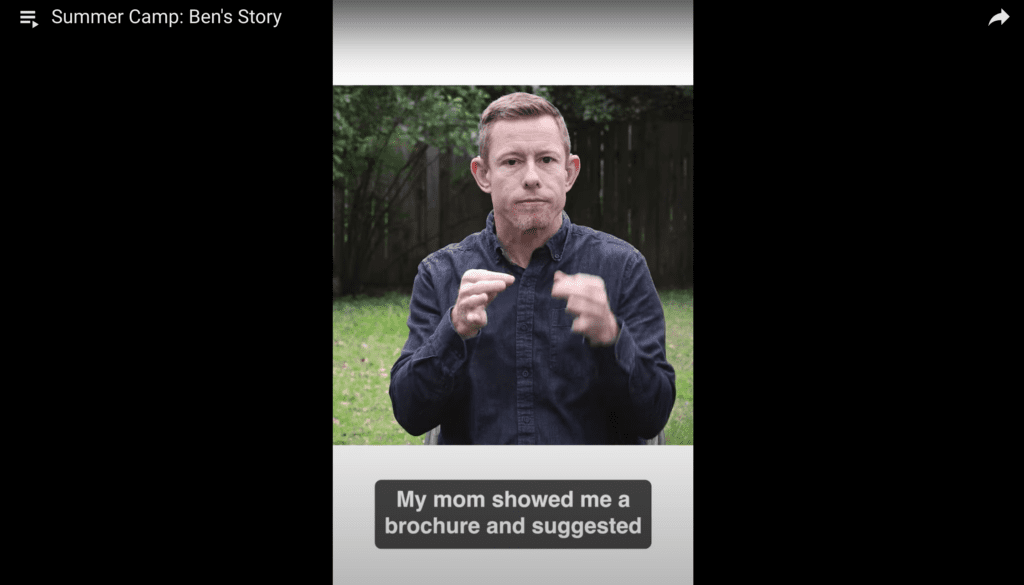
My mom showed me a brochure and suggested I go to this summer camp. I was adamant that I not go. In fact, I was really offended by the idea of going to a deaf camp. I had a very hearing mentality then.
Summer Camp: Alison’s Story
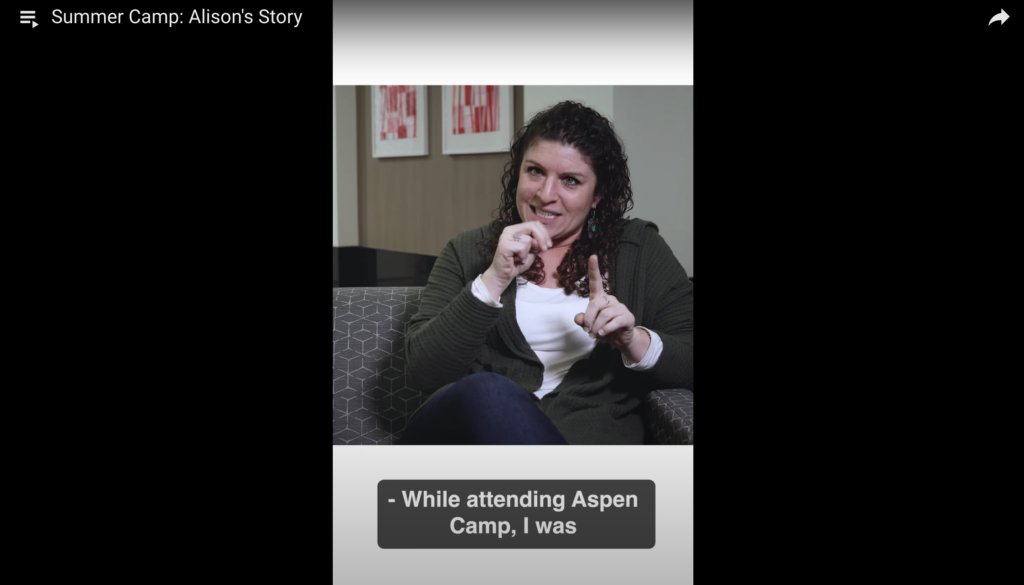
While attending Apsen Camp, I was among a diverse group of campers, from those who used ASL, to Signing Exact English. Campers from different academic experiences and environments all in one place, working together.