

Speech-to-Text Services: Hiring STTS Providers

STTS providers can be hired as staff members, independent contractors, or be contracted through an agency. When evaluating qualifications, gather information about the provider’s skills, credentials, and experience working in various settings prior to hiring.
Speech-To-Text Services (STTS)

Speech-To-Text Services is an umbrella term for the different types of real-time captioning services where spoken and auditory information are translated into text by a trained professional.
Root Causes and Key Impact Areas
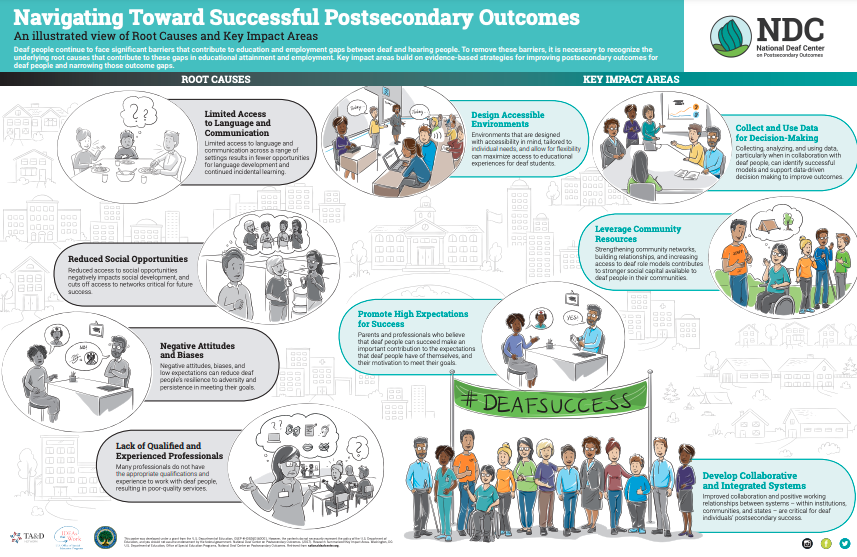
Root causes and key impact areas.
Remote Services Poster

Deaf students enrolling in colleges across the country are on the rise and securing access services can be difficult for institutions. Remote interpreting and speech-to-text services are viable options for institutions experiencing: shortages of qualified providers, specific interpreting or captioning needs for a course, or last-minute requests for urgent situations.
Interpreting: Interpreters and Confidentiality

Interpreters adhere to a Code of Professional Conduct (CPC) upheld by the Registry of Interpreters for the Deaf (RID) with the first tenet focusing on confidentiality. This tenet notes that interpreters must protect consumers’ privacy and that any content information discussed between all parties must not be shared.
Interpreting
Interpreting eases effective communication between hearing and deaf people, and is commonly used in education, employment, healthcare, legal settings, entertainment, and more.
Deafverse: Teacher Strategy Guide
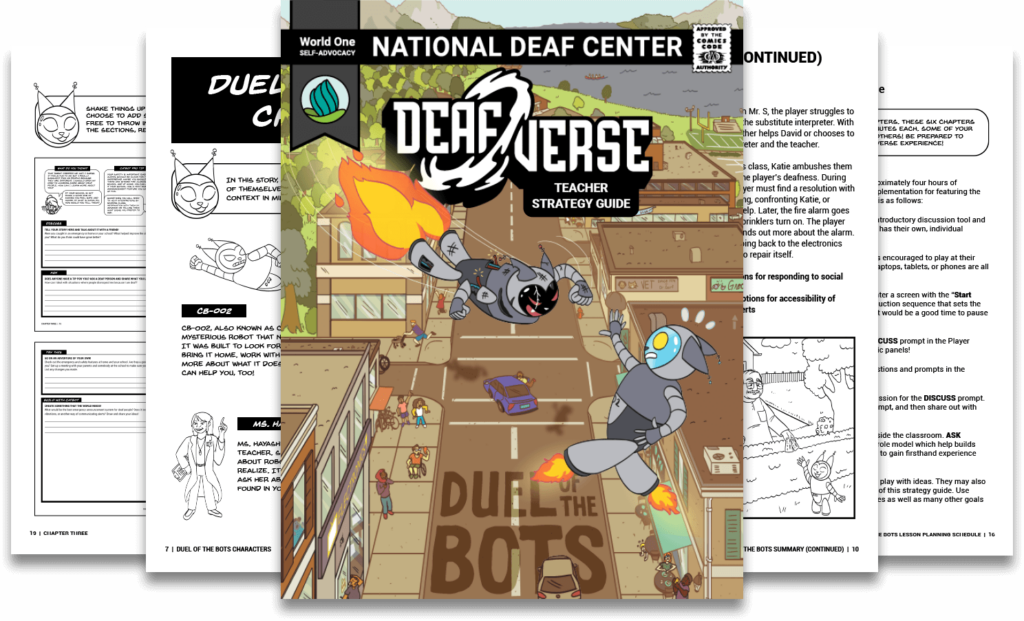
This book offers guidance before, during, and after the game, including learning objectives as well as a summary of the story and characters. You will also find important vocabulary, activity guides for each chapter, and other supplemental materials
Deafverse: Player Strategy Guide
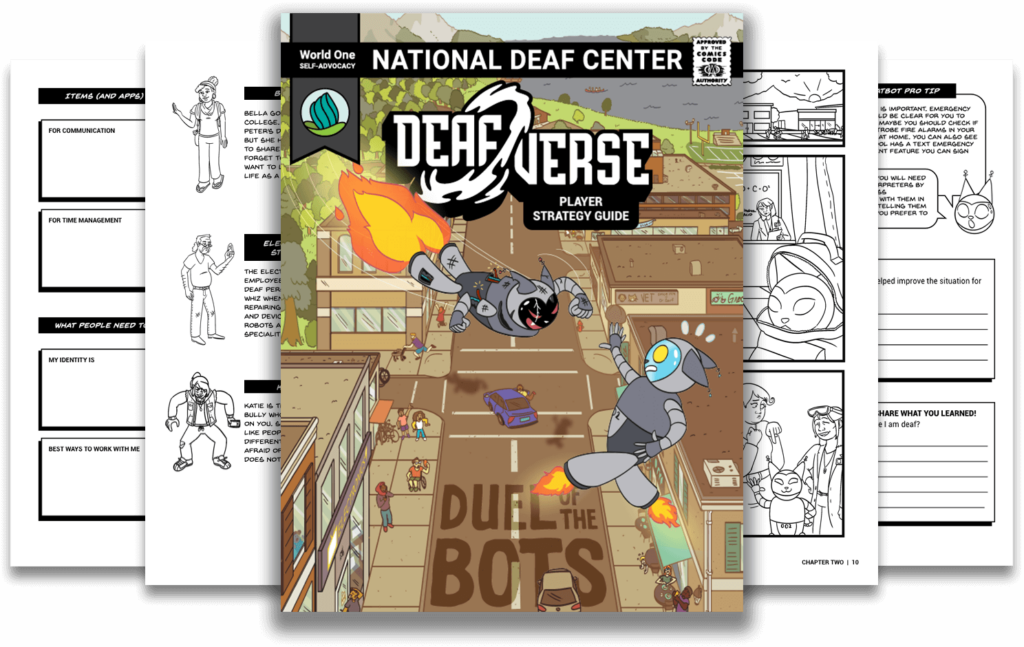
Deafverse is a game about the deaf experience. Sometimes players need to step back and look at the things happening to them in life. That’s why they should get their own strategy guide! This guide uses examples from Deafverse so players can think about what they would do in these situations.
Deaf Success for Fall Semester: Guide for High Schools

Educational and transition planning for deaf students requires a flexible, positive approach, now more than ever. NDC has answered many FAQs about how to find needed resources to support transition, what programs are available in different states, and how to meet legal obligations — even if students are not in the school building every day.
Deaf Success for Fall Semester: Guide for Families, Parents, and Students

Fall 2020 brings many questions for your deaf youth’s education and future. Our research shows family support is so important! While there is a great deal of uncertainty now and in the months ahead, we encourage families to use ways to connect with their deaf teenager, look for opportunities to seek community support, and advocate for their equal access guaranteed by law to all learning opportunities.
Deaf Success for Fall Semester: Guide for Colleges and Postsecondary Schools

No matter which direction your institution goes for Fall 2020 — online, hybrid, or face-to-face — don’t let your deaf students fall through the cracks. Colleges, universities, and postsecondary training programs have a legal responsibility to provide equal access to deaf students when they shift online. The only way forward is for us all to work together.
Videos with Music
When a video incorporates musical elements, this information should be incorporated into the captioning track for accessibility purposes. The Described and Captioned Media Program’s (DCMP) Captioning Key includes tips and guidance on captioning music under Sound Effects and Music. For example, music with lyrics should be introduced with the name of the artist and title in brackets, followed by the verbatim lyrics between music note symbols (♪).