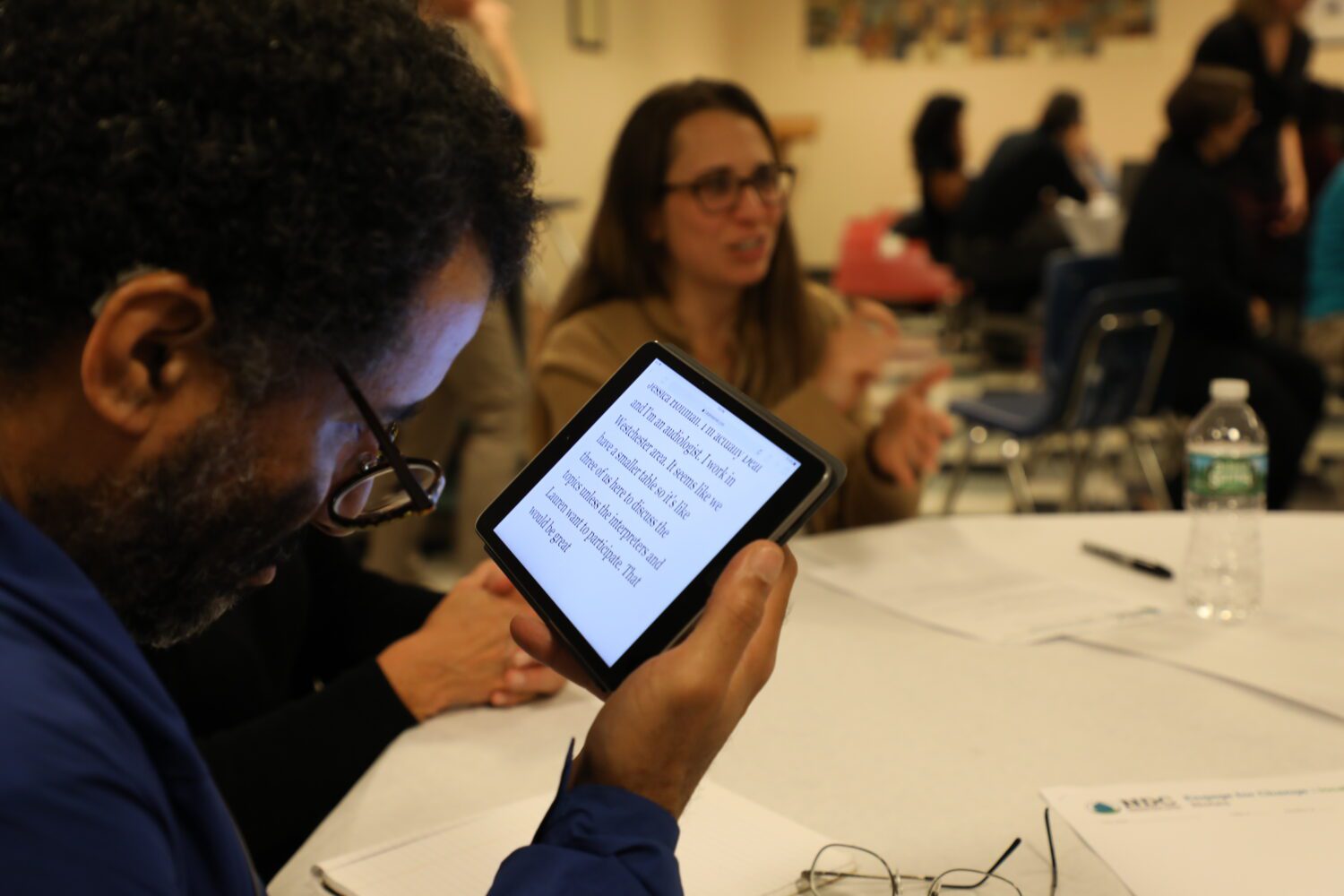
Creating a clear campus policy for captioned media is recommended as a proactive measure to help everyone follow the same procedures and ensures that accessibility isn’t an afterthought. Many institutions are choosing to caption all media–whether or not a deaf student has requested it–because it reduces last-minute scrambling and makes content accessible to the entire campus community. When these policies are supported and upheld by campus leadership, they become even more effective and easier to implement.
Building a strong captioned media policy works best when the right people are at the table. Many campuses create a captioning or accessibility committee that brings together key departments—such as disability services, IT, the library, curriculum and instruction, administration, and any other relevant departments with a role in creating or sharing media. The committee’s main goal is to develop clear campus-wide policies and procedures for everyone to understand their role in making media accessible. When creating a captioned media policy, there are several important elements to consider, including:
Request Procedure
Outline how to submit a request for a video that needs to be captioned and who handles it on campus. Clarify whether your institution can caption videos in‑house or if requests must be sent to an external captioning vendor. Some campuses centralize this process through disability services, while others require departments to use a designated contracted vendor. If possible, consider creating a captioning center with a coordinator to manage requests. Be sure to include expected turnaround times so users know what to plan for.
Funding Structure
Decide whether the costs for captioning media will be covered through a centralized structure that consists of designated funds that is shared across campus or a decentralized model that holds each department responsible for the costs of captioning media. Either approach has different benefits depending on your institution’s size and workflow.
Media Priority
Some institutions set a priority structure–for example, academic materials for students requesting captioned media accommodations, public-facing website media content, and frequently used media (e.g. orientation and training videos). Other institutions choose to caption all media by default.
Purchasing Course Materials
Create guidelines for departments to purchase media that are already captioned. Additionally, any required course materials, such as online or interactive components, should be checked for audio and visual accessibility before assigning them as course-required materials. Encourage departments to buy only pre-captioned media/materials.
Instructor Responsibilities
Instructors should only use captioned media and understand what quality captions look like. When a deaf student is enrolled in classes, instructors should proactively submit any course materials well in advance to be captioned and follow the institution’s timelines outlined. Policies should clearly state instructors should not show uncaptioned media when a deaf student is in the course.
FAQ: Should instructors be responsible for captioning their own videos and recorded lectures?
Institutional Resources
Consider using student workers, interns, staff, or community volunteers to support tasks like creating transcripts, checking for errors, or synchronizing transcripts to videos. Offer stipend, paid, or volunteer-based opportunities depending on training and experience.
Developing captioned media policies for your campus? You can use our policy generator tool or schedule a consultationto create customized policies tailored to your institution’s needs.
XWe use cookies on our website to give you the most relevant experience by remembering your preferences and repeat visits. By clicking “Accept All”, you consent to the use of ALL the cookies. However, you may visit "Cookie Settings" to provide a controlled consent.Read MoreCookie SettingsReject AllAccept
Manage consent
Privacy Overview
This website uses cookies to improve your experience while you navigate through the website. Out of these, the cookies that are categorized as necessary are stored on your browser as they are essential for the working of basic functionalities of the website. We also use third-party cookies that help us analyze and understand how you use this website. These cookies will be stored in your browser only with your consent. You also have the option to opt-out of these cookies. But opting out of some of these cookies may affect your browsing experience.
Necessary cookies are absolutely essential for the website to function properly. These cookies ensure basic functionalities and security features of the website, anonymously.
Cookie
Duration
Description
cookielawinfo-checkbox-analytics
11 months
This cookie is set by GDPR Cookie Consent plugin. The cookie is used to store the user consent for the cookies in the category "Analytics".
cookielawinfo-checkbox-functional
11 months
The cookie is set by GDPR cookie consent to record the user consent for the cookies in the category "Functional".
cookielawinfo-checkbox-necessary
11 months
This cookie is set by GDPR Cookie Consent plugin. The cookies is used to store the user consent for the cookies in the category "Necessary".
cookielawinfo-checkbox-others
11 months
This cookie is set by GDPR Cookie Consent plugin. The cookie is used to store the user consent for the cookies in the category "Other.
cookielawinfo-checkbox-performance
11 months
This cookie is set by GDPR Cookie Consent plugin. The cookie is used to store the user consent for the cookies in the category "Performance".
viewed_cookie_policy
11 months
The cookie is set by the GDPR Cookie Consent plugin and is used to store whether or not user has consented to the use of cookies. It does not store any personal data.
Functional cookies help to perform certain functionalities like sharing the content of the website on social media platforms, collect feedbacks, and other third-party features.
Performance cookies are used to understand and analyze the key performance indexes of the website which helps in delivering a better user experience for the visitors.
Analytical cookies are used to understand how visitors interact with the website. These cookies help provide information on metrics the number of visitors, bounce rate, traffic source, etc.
Advertisement cookies are used to provide visitors with relevant ads and marketing campaigns. These cookies track visitors across websites and collect information to provide customized ads.