

Deafverse Choose Your Own Adventure Activity Kit
Encourage students to think about getting ready for life after high school, and their goals for continuing their education, getting a job, and living their life. Use the Choose Your Future! Activity Kit to discuss their strengths, interests, and needs. Then empower them to decide on goals that align with those personal preferences.
How to Host Effective and Accessible Online Meetings with Deaf Participants

Whether you are meeting with colleagues who are working from home due to the COVID-19 pandemic, or connecting with clients in another state, a little advance planning can make sure your next online meeting is effective and accessible to deaf and hard of hearing people who will be attending.
Besides running a better meeting, effective communication between hearing and deaf people has other benefits for career success. Research shows it strengthens relationships, increases well-being, and fosters meaningful participation in the workplace.
[Disponible en español]
Tips for Instructors: Teaching Deaf Students Online

When teaching online, instructors have an important role in supporting and ensuring the success of students — especially deaf students. Online courses need to be accessible for deaf students. This resource outlines some key tips to think about when designing online courses and planning for course materials that are a good fit for online instruction.
Using Hearing Assistive Devices at Home: 5 Tips for Deaf College Students
With the sudden shift to online learning during the COVID-19 pandemic, deaf and hard of hearing college students who use hearing assistive technology (HAT) may need to shift technology gears — and perhaps even consider different communication methods — to access your online classes from home.
Professional Development Checklist: Six Ways to Improve Your Skills from Home
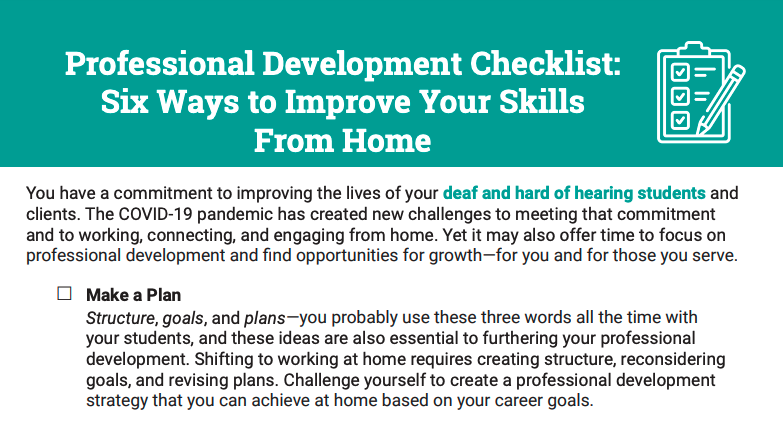
This six-point checklist can help you grow professionally and improve your work with deaf students and clients. It is designed for disability service providers, vocational rehabilitation counselors, student support specialists, academic advisors, and anyone who regularly works to ensure greater deaf success in education and employment.
Deafverse Can Help Deaf Teens Connect and Learn from Home
For deaf middle and high school students, there are very few accessible online games or resources. That’s why Deafverse, the first-ever American Sign Language (ASL) accessible online game for deaf teenagers, is the go-to game for at-home learning. [Disponible en español]
Take Control of Your Online Learning: Tips for Deaf College Students
COVID-19 has made colleges and universities around the United States switch to online learning for everyone — including deaf students like you.
Whether you have taken an online class before or are new to this, remember: accommodations don’t stop because you are now learning remotely. Here are some strategies for you to take control of your online learning and set yourself up for success.
Checklist for Teaching Deaf Students Online
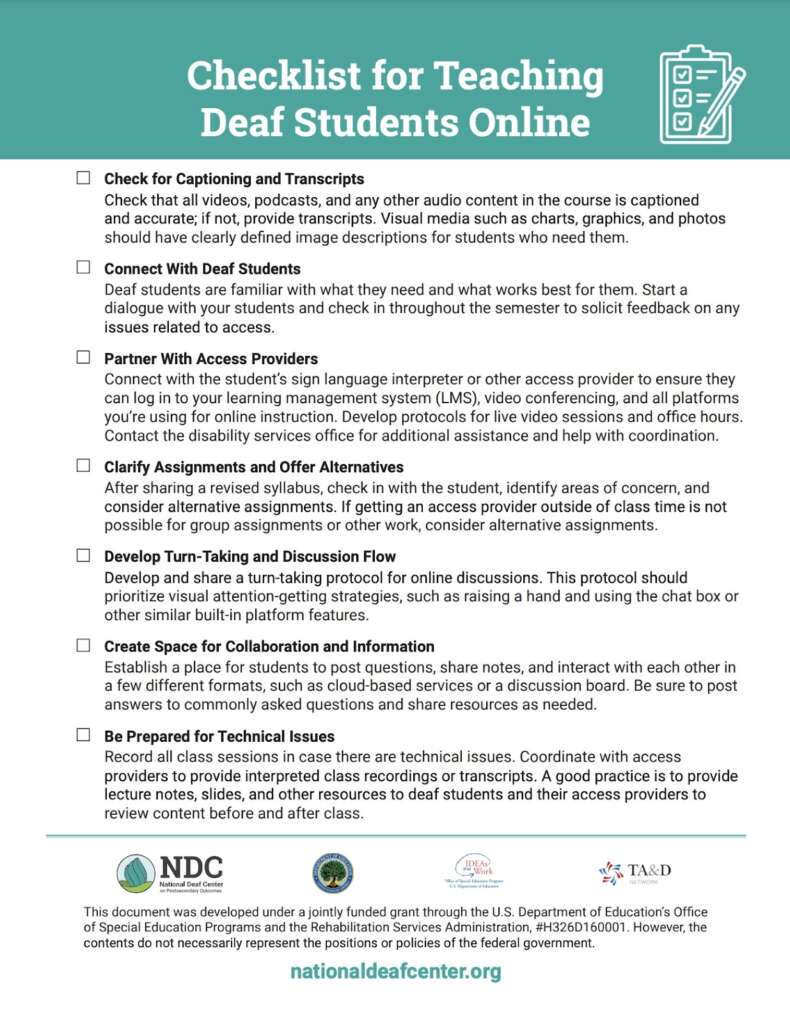
As schools across the country transition to online courses in response to COVID-19, educators are working to ensure students receive the same quality education they received in the classroom. For deaf students, this means all course content must be accessible and equitable.
This checklist for teaching deaf students online helps educators meet their needs and ensures compliance with the law. Stay tuned for a new National Deaf Center resource in the coming weeks, which will expand the checklist with more detailed tips and advice.For regularly updated information and resources in response to COVID-19, visit: nationaldeafcenter.org/covid19
[View Full Resource]
As schools across the country transition to online courses in response to COVID-19, educators are working to ensure students receive the same quality education they received in the classroom. For deaf students, this means all course content must be accessible and equitable.
This checklist for teaching deaf students online helps educators meet their needs and ensures compliance with the law.
Checklist for Teaching Deaf Students Online
[Download PDF]
Captioning & Transcripts
Check that all videos, podcasts, and any other audio content in the course is captioned and accurate, or have transcripts you can provide. Visual media such as charts, graphics, and photos should have clearly defined image descriptions for students who need them.
Connect with the Deaf Students
Deaf students are familiar with what they need and what works best for them. Start a dialogue with your students and check in throughout the semester and solicit feedback on any issues related to access.
Partner with Access Providers
Connect with the student’s sign language interpreter or other access provider to ensure they can log in to your LMS, video conferencing, and all platforms you’re using for online instruction. Develop protocols for live video sessions and office hours. Contact the disability services office for additional assistance and help with coordination.
Clarify Assignments & Offer Alternatives
After sharing a revised syllabus, check in with the student, identify areas of concern, and consider alternative assignments. If getting an access provider outside of class time is not possible for group assignments or the work, consider alternative assignments.
Develop Turn-Taking & Discussion Flow
Develop and share a turn-taking protocol for online discussions. This protocol should prioritize visual attention-getting strategies, such as raising a hand and using the chat box or other similar built-in platform features.
Create Space for Collaboration & Information
Establish a place for students to post questions, share notes, and interact with each other in a few different formats, such as Google docs or a discussion board. Be sure to post answers to commonly asked questions, and share resources as needed.
Be Prepared for Technical Issues
Record all of class sessions in case there are technical issues. Coordinate with access providers to provide interpreted class recordings or transcripts. A good practice is to provide lecture notes, slides, and other resources to deaf students and their access providers to review content before and after class.
Questions? Contact NDC Today.
Supporting Deaf Veterans
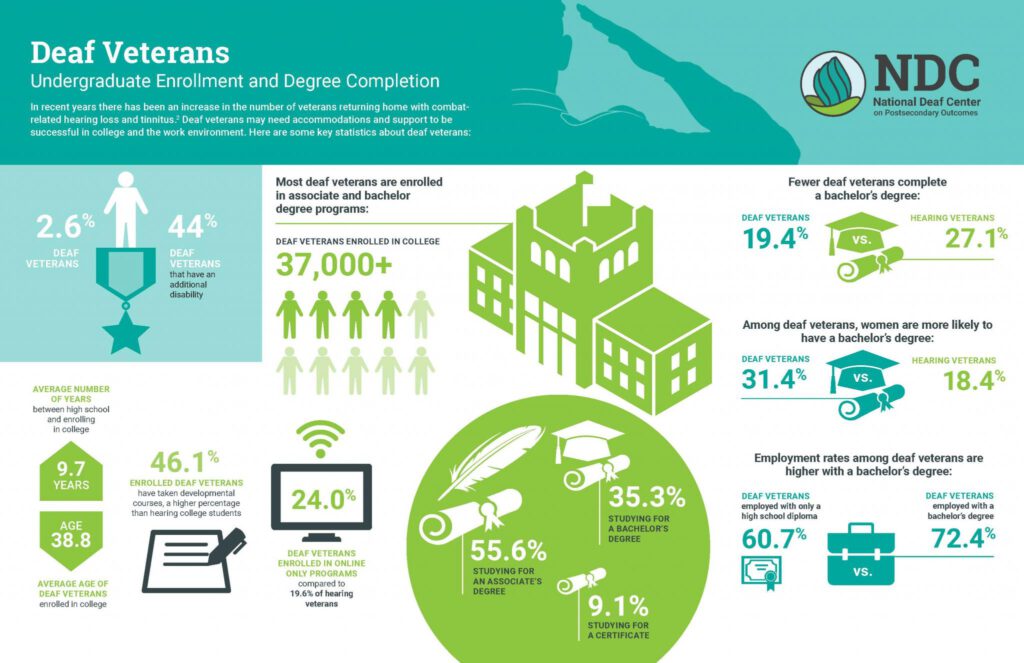
In recent years there has been an increase in the number of veterans returning home with combat-related hearing loss and tinnitus. Deaf veterans may need accommodations and support to be successful in college and the work environment.
Family Support for Deaf Teens
Deaf teenagers with stronger family support are more successful after high school. To succeed, deaf people need to be able to make their own decisions, communicate about their preferences, and advocate for their needs. This is called self-determination.
Creating Work-Based Learning Programs for Deaf Youth
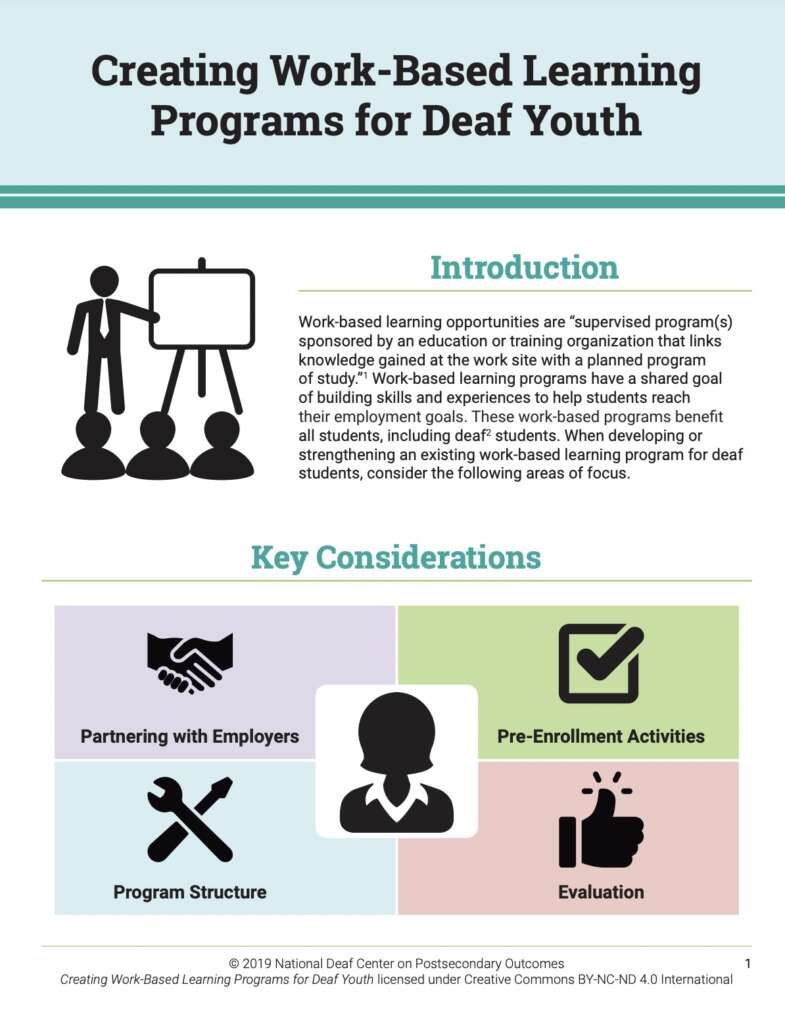
Work-based learning programs have a shared goal of building skills and experiences to help students reach their employment goals. These work-based programs benefit all students, including deaf students.
Evaluation Tool for Serving Deaf Students
Disability services offices can benefit from conducting an internal assessment of policies, procedures, and other practices while managing accommodations for deaf students. The purpose of this guide is to help identify effectiveness, potential gaps, or areas in need of improvement to support accessible postsecondary environments for deaf students.