
Video Remote Interpreting: Can it Benefit Your Institution?

What is Video Remote Interpreting (VRI)? VRI is a helpful tool for effective communication that works by connecting deaf individuals with interpreters through video calls when in-person interpreters are not available. In a nutshell, VRI works by leveraging video calls to ensure that everyone gets their message across, no matter the circumstances. With that in mind, let’s explore how VRI can be a standout tool for your institution.
Aurora University’s Path Toward Supporting Deaf Students’ Success

Are you single-handedly managing service provision for students with disabilities on your campus? Whether your student population is big or small, ensuring that all students get access to the high-quality services they need to thrive on campus is no easy feat. When people say, “it takes a village,” it really does! That’s why we’re excited to feature one of our campus partners at Aurora University that is leveraging the power of partnerships and relationships for capacity-building.
New Data about Deaf College Students & Emerging Challenges

The National Deaf Center has released the newest Access, Belonging, and Affirmation: Deaf Postsecondary Access and Inclusion Scale report—authored by Jeffrey Levi Palmer, Carrie Lou Bloom, Lore Kinast, and Tia-Nikki Ivanko—which sheds light on the experiences of deaf students in higher education institutions across the United States during the 2022–2023 academic year.
A New Look at 2022 Census Data about Deaf People

As we begin the new year, let’s harness the power of data to make informed decisions and navigate our ever-changing world. Use the latest employment and education data from NDC to improve postsecondary outcomes for deaf people. The U.S. Census Bureau has released 2022 data from the American Community Survey, and we have updated our data dashboard with the latest information. You can use the dashboard to compare your state to the national average, advocate for additional funding and services, and download charts to use in presentations.
NDC’s Year in Review: A Year of Engagement, Learning, and Growth

As 2023 comes to a close, it’s time to reflect on the exciting journey we’ve had together. This year has been filled with community engagement, learning opportunities, and impactful initiatives. Let’s take a look at some of the key highlights that have made 2023 such a memorable year for NDC.
Collecting Student Input to Improve Engagement: Webinar Recap
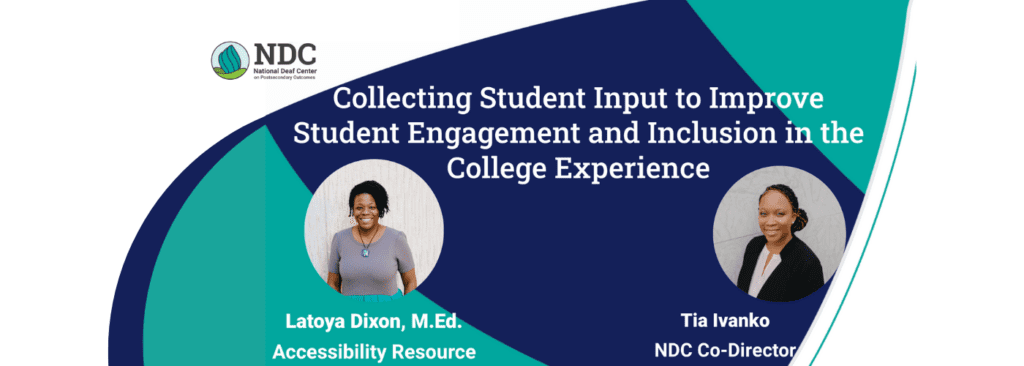
In our recent webinar, Collecting Student Input to Improve Engagement, the spotlight was on revolutionizing the educational landscape for deaf students. Since existing data falls short of providing a holistic understanding of deaf student experiences at various educational institutions, collecting input provides a clearer understanding of student experiences and can highlight effective strategies. The session also urged educational institutions to take proactive steps towards understanding and enhancing the experiences of deaf students.
Final Exam Preparation: Are Deaf Students Ready?

Disability service professionals (DSPs) can play a vital role in helping deaf students access the testing accommodations they need. DSPs can work with students to identify their individual needs, advocate for those needs to be met, and provide them with information and support throughout the testing process.
Teachers’ Common Challenges and How Deafverse Classroom Can Help
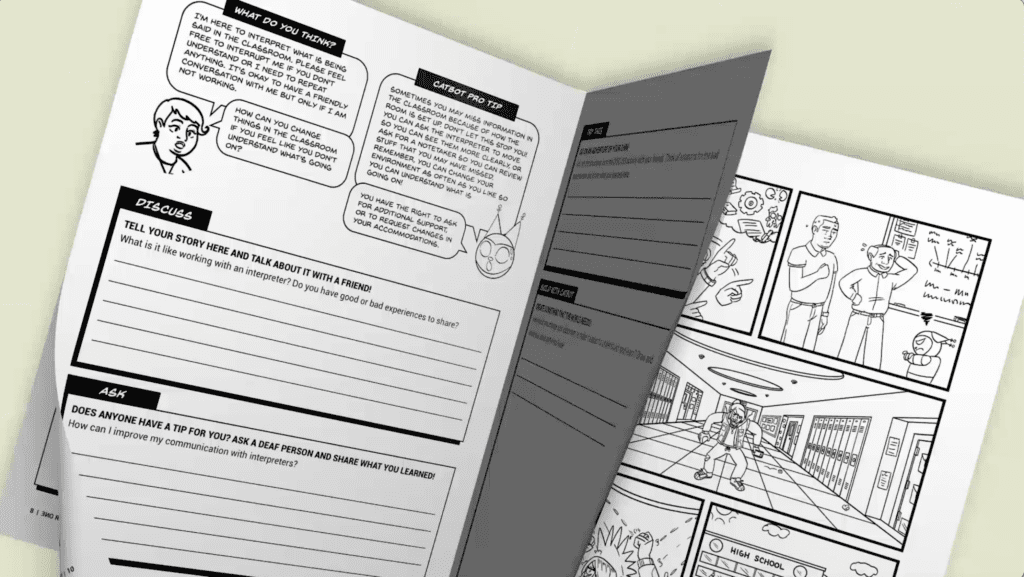
Using games in the classroom is an excellent way to keep students engaged and interested in learning. This is especially true for educators teaching youth valuable transition skills, which isn’t always the most exciting subject. Educators of deaf students may find it challenging to find accessible resources that can help their students thrive. That’s why NDC created Deafverse, an online Choose-Your-Own-Adventure game designed by deaf people for deaf students that teaches key transition skills such as self advocacy and career readiness, in 2019.
Coordinating Effective Accommodations for Deaf Students in College

Coordinating effective accommodations and services for deaf students in a college setting requires careful planning, collaboration, and a commitment to fostering inclusivity. In this blog post, we will explore the essential steps involved in providing the best possible support for deaf students, ensuring accessibility, inclusivity, and a positive educational experience.
New Jersey Virtual Deaf Career Day Helps Deaf Students Explore Career Options

The Department of Education, Office of Special Education, the Department of Labor and Workforce Development, Division of Vocational Rehabilitation Services, and a team of partners began planning the second annual “We Can! Virtual Deaf Career Day” event in early spring 2022 and hosted the event on December 2nd, 2022. The event was a resounding success, with over 150 high school students across the state and 29 panelists from across the country participating!
Supporting Deaf People: Closing the Employment Gap

Deaf people in the United States are less likely to be employed than hearing people, and employment rates vary widely by race, ethnicity, and disability. This is according to new data from the National Deaf Center on Postsecondary Outcomes (NDC).
Top Considerations for Assistive Listening Devices and Systems

Exploring the purpose and functionality of Assistive Listening Devices and Systems (ALD/ALS) for disability service professionals cannot only enhance their own expertise in serving deaf students, but have a positive impact on the student experience when requesting accommodations. Accommodation usage is an individualized experience, and needs may vary depending on context, content, setting, and even conversation partners.