“My Experience Was Real”: Advancing Transition and Employment Outcomes for Deaf Students in Puerto Rico

Published on July 14, 2026

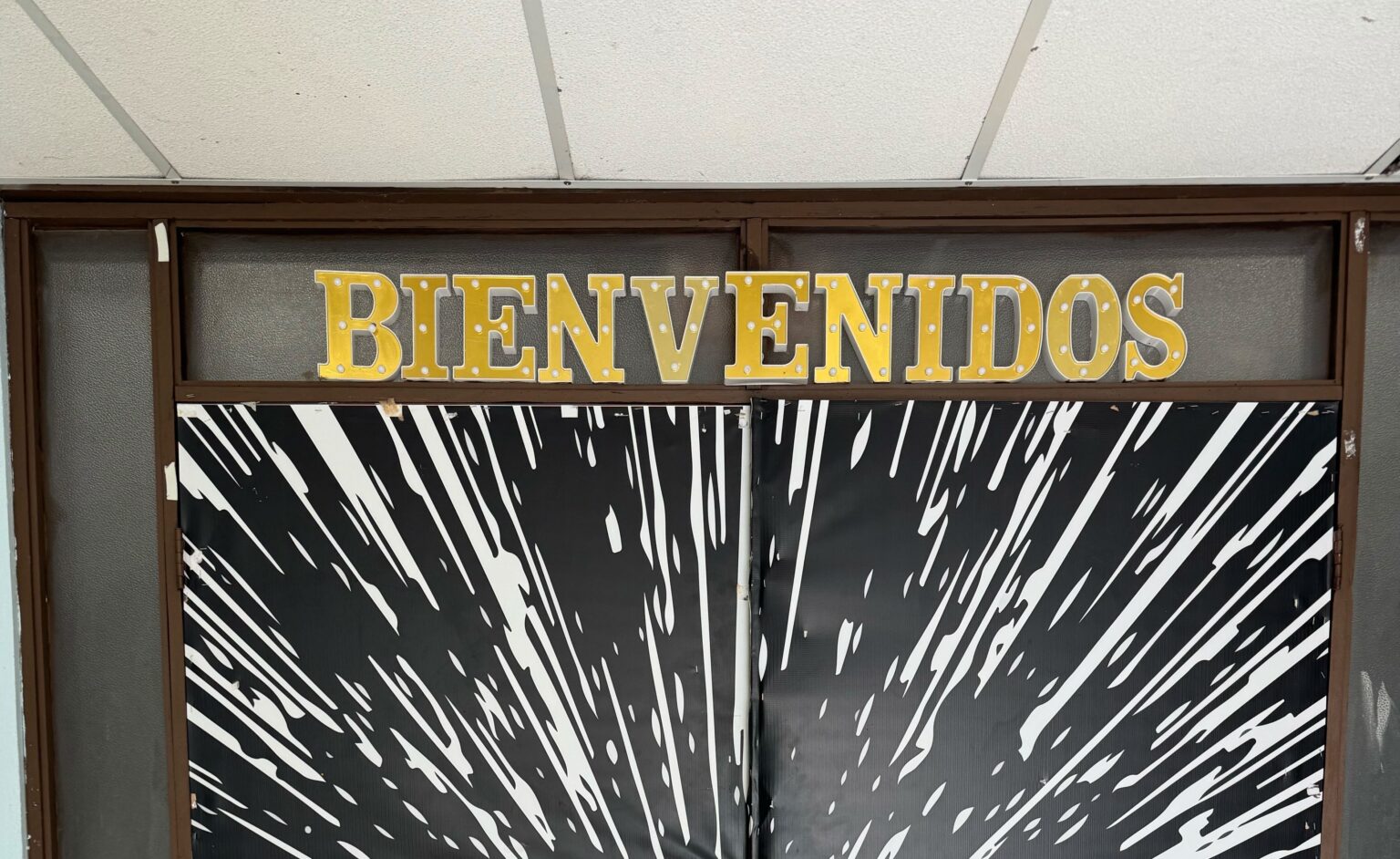
A pair of double doors wrapped in a bold black-and-white starburst design, topped with gold marquee-style letters spelling "BIENVENIDOS.”

“My experience was REAL.”

With that statement, Asociación Puertorriqueña de Sordos y Sordos-Ciegos (APSSC) President Zoé Rodríguez grounded a room of vocational rehabilitation (VR) and higher education disability services (DS) professionals in the barriers that deaf Puerto Ricans continue to face while obtaining postsecondary education and employment. While systems are often viewed as functional—if imperfect—the lived experiences shared throughout this visit told a more urgent story: too many deaf students still encounter unclear pathways, inconsistent access, and barriers that slow or derail their progress beyond high school.

In early 2026, the National Deaf Center (NDC) returned to Puerto Rico to build on last year’s community conversations (Spanish). This visit focused on what comes next—strengthening transitions from K–12 into postsecondary education and training programs, where access and opportunity directly connect to long-term employment outcomes.
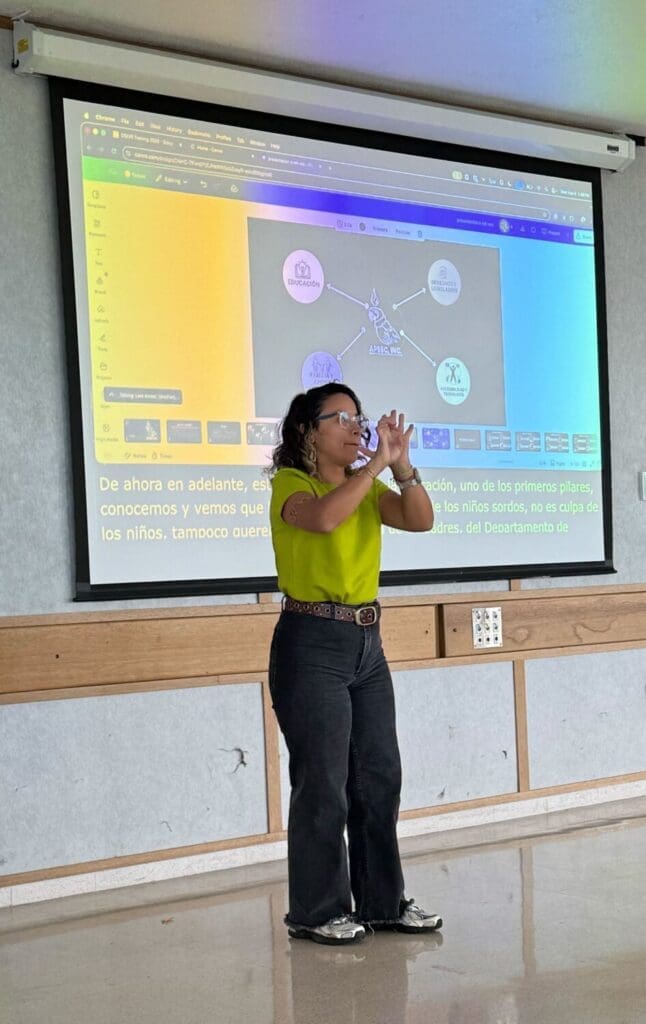
Zoé is wearing a bright green shirt with dark pants, signing in LSPR while presenting an APSSC slide covering education, rights and legislation, family and support, and accessibility and technology.

Across communities and campuses in Ponce, San Juan, and Mayagüez, one message was consistent: the foundation is already here. Organizations like the APSSC , along with families, educators, and local leaders, are actively building support systems and advocating for stronger outcomes. There is a clear opportunity to better align and leverage cross-system supports that serve deaf students, while also supporting their families.

Liz Vázquez González, a deaf teacher working directly with deaf students in Ponce, put it this way:

"Cuando les damos recursos a la familia en información y apoyo, desarrollamos Sordos que aprenden a conocer su identidad y su valor en la sociedad."

"When we give resources to the family in information and support, we develop Deaf people who learn to know their identity and value in society."

César-Gabriel Jiménez Colón, a deaf ASL teacher also based in Ponce, added:

"El apoyo a los Sordos comienza en casa. Cuando las familias acompañan su crecimiento, ellos descubren su voz, su fuerza y su camino."

"Support for the Deaf begins at home. When families accompany their growth, they discover their voice, their strength and their path.
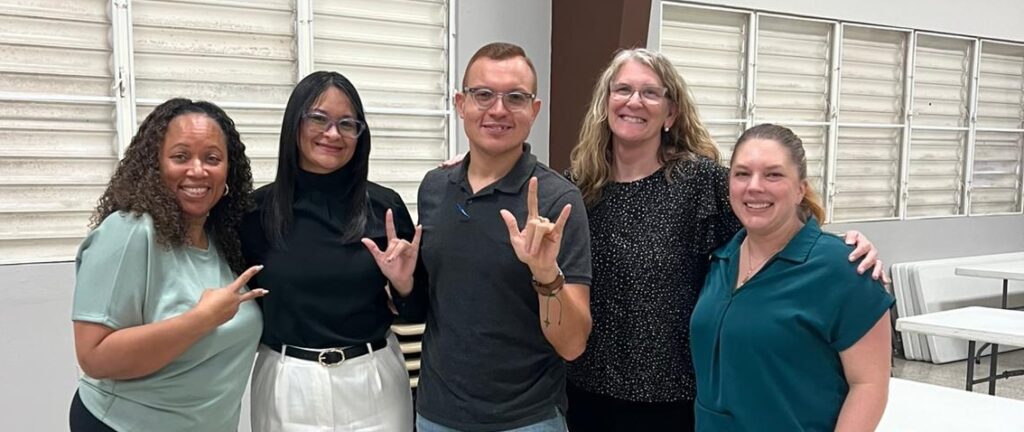
From left to right, Tia, Liz, César-Gabriel, Lore, and Kate - they are posed together indoors, smiling for the camera with two of them showing the "I love you" sign.
At Sacred Heart University, that opportunity was clear. The institution’s structured, career-focused advising model ensures that students develop a clear plan for their future—working closely with academic and career counselors to map goals, refine direction, and present a defined pathway forward. The disability services space reflected that same intention: welcoming, student-centered, and actively used. It creates a strong foundation for ensuring access is embedded across the student experience—from academic planning to career development.

At the University of Puerto Rico–Mayagüez, a different but equally promising strength emerged. The university’s large-scale job placement program connects students with major employers twice each year, achieving placement rates of roughly 80%. Employer expectations around hiring individuals with disabilities add further momentum. While the number of deaf students is currently small, that scale creates an opening—for more intentional outreach, stronger student networks, and a clearer pipeline into employment.
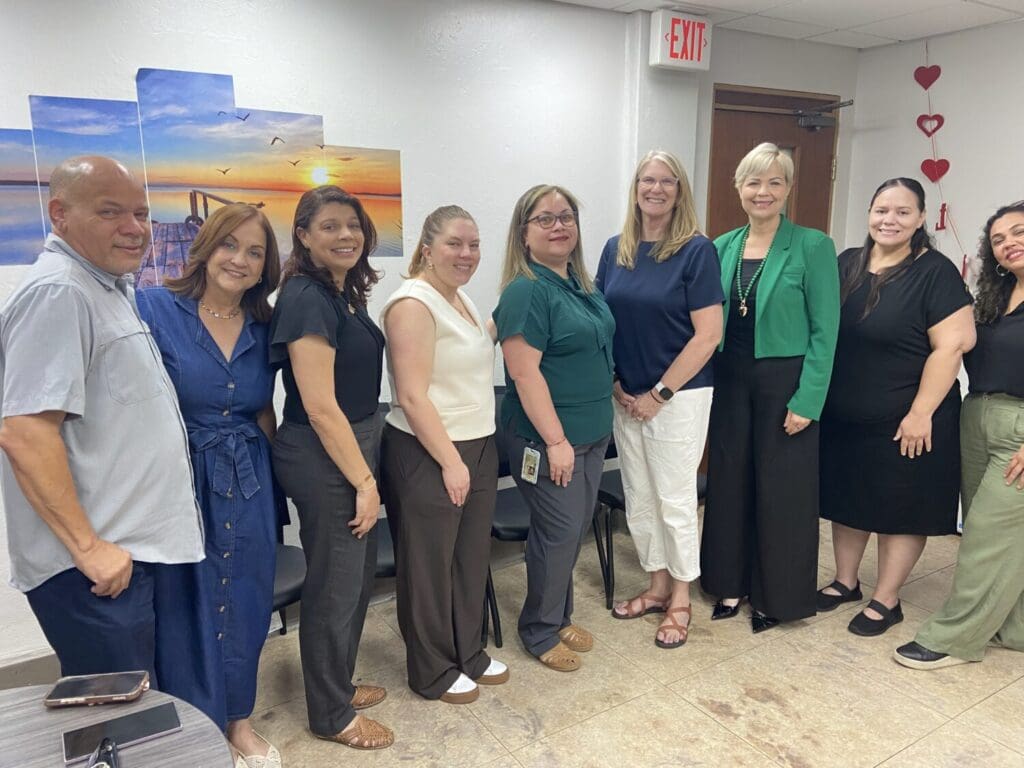
A photo of people who lined up outside: Mr. Samuel Mojica Acosta, Administrative Assistant of OSEI/Office of Services for Students with Disabilities, Dr. Gloribell Ortiz Ríos, Associate Dean of Students, Guinevere (Interpreter), Kate, Thyrzia Roura Cordero, Interim Director of OSEI/Office of Services for Students with Disabilities, Lore, Dr. Carolyn J. Mercado Rosado, Associate Dean of Students, and two interpreters.
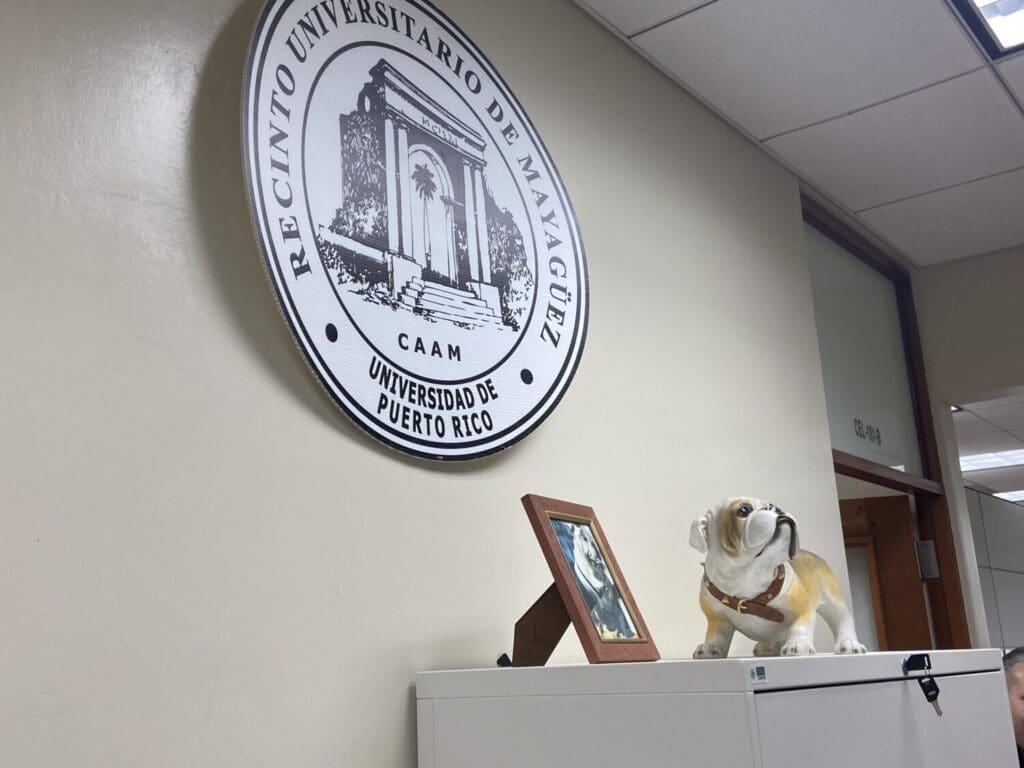
A large University of Puerto Rico Mayagüez (CAAM) wall seal is displayed above a cabinet holding a framed photo and a decorative bulldog statue in an office hallway.

At the same time, gaps between systems remain a central challenge. Students and families continue to navigate unclear roles and timelines across K–12, VR, and postsecondary institutions—particularly during critical transition points. Bridging those gaps requires not just improved processes, but stronger relationships.

This visit marked meaningful progress on that front. For the first time, NDC convened VR and DS professionals in a shared training space to map processes, surface disconnects, and begin building a more coordinated approach. Importantly, participants didn’t just identify challenges—they stepped into the role of changemakers, recognizing their ability to influence how systems function and how students experience them. That shift—from maintaining systems to actively improving them—is where long-term impact begins.
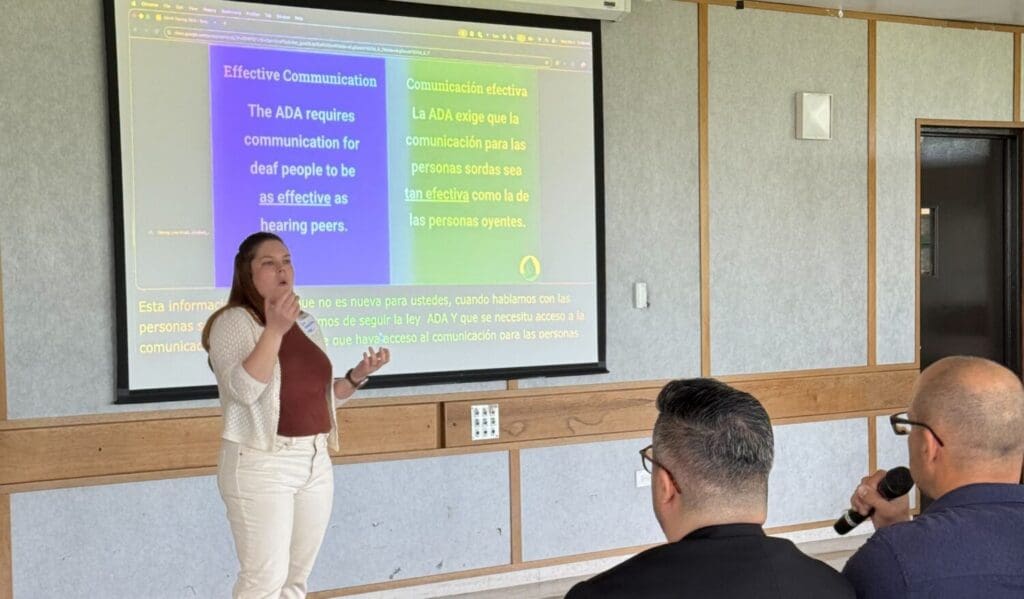
Woman giving a presentation on effective communication to a small audience.
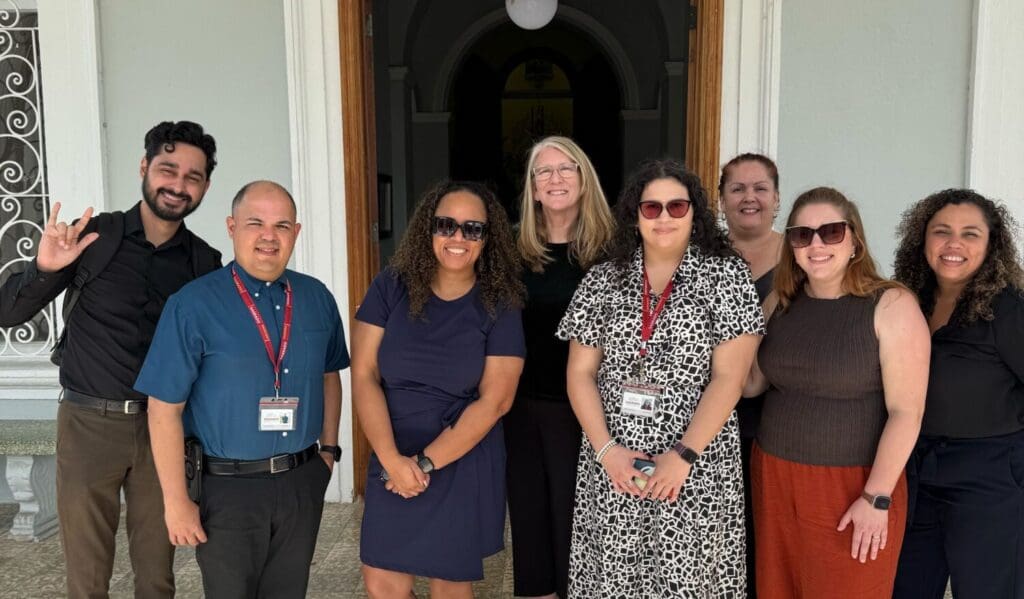
L to R: Jose De Jesus (interpreter), Larry Perez (counselor from Sagrado), Tia, Lore, Neysha Beltran (counselor from Sagrado), Annette (Interpreter), Kate, Marina Martinez Cora (Interpreter)

Puerto Rico’s deaf community is not starting from scratch. It is building from strength—strong leadership, engaged institutions, and a clear vision for what students need to succeed. NDC will continue working alongside APSSC, campuses, and system partners to strengthen postsecondary access, align transitions, and expand pathways that lead to meaningful employment.

Because as Zoé reminded the room, the experiences are real—and so is the opportunity to change them.

Save This
Please login to bookmark Close
Categories: Impact Stories
Tags: deaf students Puerto Rico, APSSC, Collaboration Work, Coordination, deaf community, deaf education, deaf employment, deaf youth, higher education access, IEP planning, k-12 transition, LSPR, NDC, postsecondary transition, Puerto Rico, vocational rehabilitation
Useful For: Higher Education Administrators, Advocates, Disability Services Professionals, Employers, Families, Interpreters, Students, Vocational Rehabilitation Professionals

Other News Items

A pair of double doors wrapped in a bold black-and-white starburst design, topped with gold marquee-style letters spelling "BIENVENIDOS.”
July 15, 2026
Impact Stories
...NDC se asoció con Puerto Rican Advocates and Consultants para fortalecer el acceso de la comunidad sorda mediante sistemas coordinados, capacitación y liderazgo compartido....
A cartoon illustration of a person with purple hair sitting at a desk and using a computer. The monitor shows an NDC webpage about transition planning for deaf youth. A rubber duck sits on top of the monitor, a white cat sleeps curled up on the desk, and a green plant sits behind them.
July 3, 2026
Current Trends, Tools and Resources
...Discover five free NDC transition planning resources helping teachers prepare deaf students for college, careers, and life after high school....
The image shows a group of eleven people posing indoors against a wall. They are smiling and appear to be part of a professional or semi-formal gathering. In the background, a sign reading "Welcome to MSD State Teams and NDC" is visible, written in colorful letters. The group includes both men and women of various ages, with some seated in front and others standing behind them. A television is mounted on the left side of the room, and a wooden piece of furniture is on the right. The walls are light-colored, contributing to a neutral backdrop.
June 1, 2026
Impact Stories
...Cross-state collaboration turns isolated transition work into shared solutions, stronger systems, and better outcomes for deaf young adults....
National Deaf Center