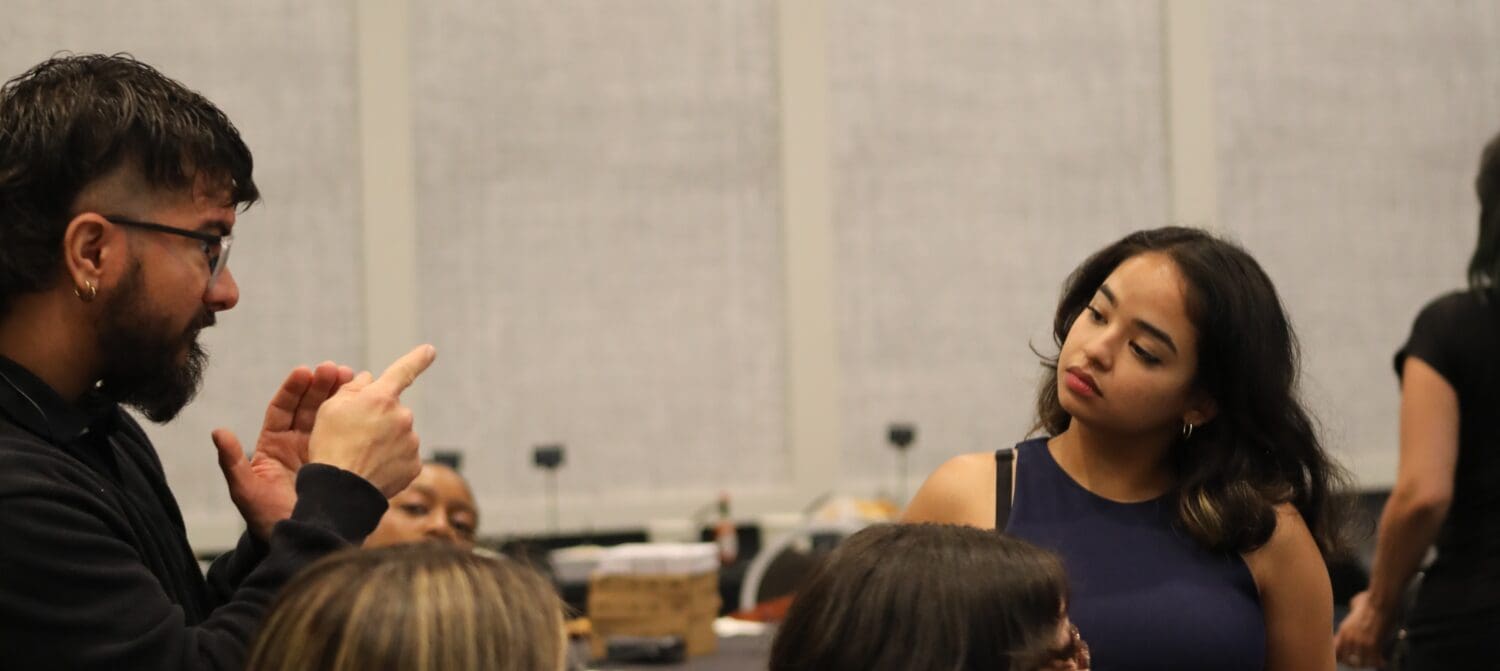

"Prior to this course and mentor experience, my understanding of accessibility and responsiveness has evolved from viewing them as compliance requirements (e.g., providing an interpreter, meeting legal standards) to seeing them as foundational principles of service delivery."
-VR Counselor
For many deaf youth, the path from high school to college or the workforce is shaped not only by ambition and potential, but also by systemic barriers that can limit access to opportunity. During this critical transition period, State Vocational Rehabilitation (VR) Agencies play an essential role in supporting youth with disabilities. Yet across the country, many VR agencies face staffing shortages and a limited number of counselors with experience working effectively with deaf people.
In response to this growing need, NDC launched the Deaf-Centered Practices for Vocational Rehabilitation Counselors Specialty Certificate Program. In 2025, NDC piloted this innovative program with 10 participants and 5 coaches. Three major themes emerged throughout the time that participants spent engaged in online learning and live virtual coaching.
-
Systemic Barriers
The first theme that emerged from the pilot was the layered and compounding challenges, within and beyond Vocational Rehabilitation systems, that influence deaf clients’ access to meaningful employment outcomes.
Participants and coaches described how these challenges often operate in subtle but powerful ways: limited access to deaf mentorship, gaps in how information is shared and understood, and standardized service models that do not fully account for differences in language background, communication preferences, age, educational experience, and access to technology.
One participant reflected on how coaching expanded their understanding:
“I became significantly more aware of the systemic barrier of information and communication inequity within the VR process. While I previously ensured an interpreter was present for meetings, my Deaf mentor helped highlight the more subtle, pervasive barrier of how information is packaged and disseminated outside of those meetings.”
Barriers are further intensified by factors such as language deprivation, rural location, and cultural identity, along with the high cost and scarcity of accommodations and qualified ASL interpreters. Limited provider and vendor capacity, often shaped by inadequate training and audist attitudes, reduces the quality and range of services available, while deaf consumers themselves are not consistently centered in decisions about their own communication needs and preferences.
Importantly, participants’ reflections moved beyond identifying external obstacles. Many began examining how their own assumptions and practices could either reinforce or disrupt these barriers.
-
Accessibility is More than Accommodations
Throughout the certificate program, accessibility was reframed as individualized and client-centered, grounded in shared decision-making that positions clients as experts on their own needs. Participants expanded their definition of access to include empathy, cultural humility, trust, flexibility, and respect, along with a more proactive stance in anticipating barriers before they arise. This shift was accompanied by increased systems awareness, as counselors developed a wider understanding of resources, policies, and advocacy pathways beyond their immediate contexts, a perspective that was further deepened through the coaching component of the program.
-
Impact of Coaching
Coaching significantly reshaped counselors’ case approaches by strengthening cultural responsiveness, deepening understanding of deaf identity and shifting employment matching toward communication-accessible and inclusive workplaces – not just a skillset.
The relational aspect of coaching was equally important:
“Having a trustworthy confidant that I could discuss work issues, concerns and cases with was vital to my success in this program.”
Participants reported improved case documentation, stronger knowledge of appeals and client rights, and more innovative problem-solving through strategies such as shared interpreter costs, hybrid service models, and visual supports. The counselor role was reframed from “fixer” to collaborator, advocate, and coach, supported by mentoring relationships that built confidence, reduced anxiety about cultural missteps, and empowered counselors to challenge inaccessible agency policies and practices with greater humility, trust, and effectiveness.
One participant reflected:
“My mentor really helped normalize the fact that I won't know every facet of Deaf culture or every client's preference, but emphasized that asking with respect and humility is the foundation of trust. I feel better equipped to challenge inaccessible procedures, thanks to the program.”
Through coaching, counselors moved from feeling unsure or reactive to practicing with intention, confidence, and shared accountability alongside deaf clients.
One participant summed it up simply:
"Having a more open mind and thinking about the individual's specific needs has helped me to grow as a VRC."
About This Program
This two-part certificate program offers a structured professional development pathway for Vocational Rehabilitation counselors who are new to or have limited experience working with deaf people. Through coaching and deaf-centered learning, counselors shifted from compliance-based service framing to collaborative client-led approaches, changing how cases are being processed, decisions are made, and barriers are addressed. Designed to build both individual and organizational capacity, the program includes:
- 20 hours of self-paced learning focused on deaf-centered strategies that meet deaf clients’ needs.
- 15 hours of personalized virtual coaching with seasoned VR professionals who have decades of experience navigating the VR system, specifically with deaf clients.
Through this immersive learning experience, participants build the foundational knowledge and practical skills needed to effectively support deaf people in accessing, navigating, and completing postsecondary education and training programs. Upon completing both components of the certificate program, participants are able to:
- Demonstrate culturally responsive case management, service coordination, and planning practices that reflect the diverse lived experiences of deaf people;
- Identify systemic barriers that impact postsecondary access, persistence, and completion;
- Recommend accessibility practices that promote equity and full participation in postsecondary settings;
- Apply deaf-centered approaches to support the educational and career success of deaf clients.
Join the Next Cohort
Want to bring deaf-centered practices to your VR work? Fill out our interest form and we’ll keep you informed as new cohort opportunities become available.
Resources
Courses for VR Professionals
- Deaf Awareness for Vocational Rehabilitation Professionals
- Partnering with Deaf Youth: Strength-Based Transition Planning for VR Professionals
- Pre-Employment Transition Services (Pre-ETS) and Deaf Youth
- Assistive Technology in Training and Workplace Settings
- Lived Experiences of Deaf People
- Transforming Systems to Improve Experiences for Deaf People
Research & Data
- Deaf People and Vocational Rehabilitation: Who Is Being Served?
- Rural Deaf Experiences: Employment and Educational Attainment Data
Additional Resources