
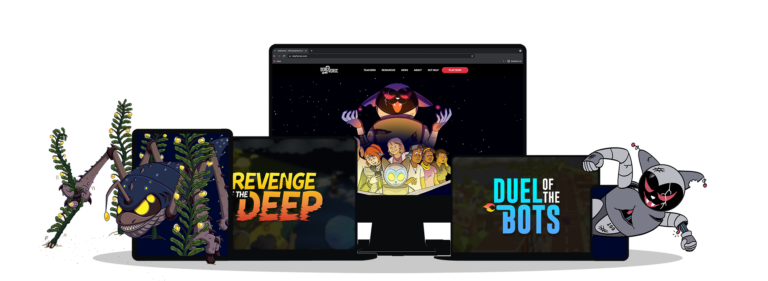
Using games in the classroom is an excellent way to keep students engaged and interested in learning. This is especially true for educators teaching youth valuable transition skills, which isn’t always the most exciting subject. Educators of deaf students may find it challenging to find accessible resources that can help their students thrive. That’s why NDC created Deafverse, an online Choose-Your-Own-Adventure game designed by deaf people for deaf students that teaches key transition skills such as self advocacy and career readiness, in 2019.
In the past 5 years, hundreds of educators have brought Deafverse into their classrooms, and hundreds of deaf students learned to navigate difficult scenarios throughout the game that better prepare them for real-world challenges. During this time, we have constantly worked on improvements, driven by feedback from educators like you, to make Deafverse a tool that fits the needs of not only your students, but also your curriculum. Here’s what we learned.
Common Challenges for Teachers with Deafverse
In an earlier focus group, teachers shared that they were struggling to utilize the game in their classrooms due to these issues:
- Requiring students to activate their own accounts,
- Emails blocked by school’s filtering systems,
- Confusion about where to start with Deafverse,
- Lack of understanding on how to use the game in a way that makes the best use of their time.
Introducing the Classroom System
To address these challenges, we recently upgraded the game to a new platform that simplifies the sign-up process, offers guest accounts for those that want to try the game without committing to it and incorporates a suite of features, called Deafverse Classroom, that allows teachers more control over their student’s progress.
Having a Teacher Account Means That You Can...
- Create virtual Classrooms, add your students’ accounts to them, and share codes, with your students for them to join if they already have accounts,
- Set up accounts for your students and share login details with them via email,
- Track your students’ progress in Deafverse
Other Teacher Account Benefits
Deafverse Classroom adds flexibility to Deafverse. You can set up accounts for your students in advance, and have them ready to play along in your classroom the next day. If your students already have accounts, just share your virtual Classroom’s code via email or write it on your whiteboard.
An exciting strategy to play Deafverse is to have your students vote on the choices to make throughout the game while you offer guidance and facilitate discussions on key concepts. Another strategy is to use class time to focus on certain transition skills and assign chapters in the game for your students to play at home. You can track their progress using Deafverse Classroom at your convenience.
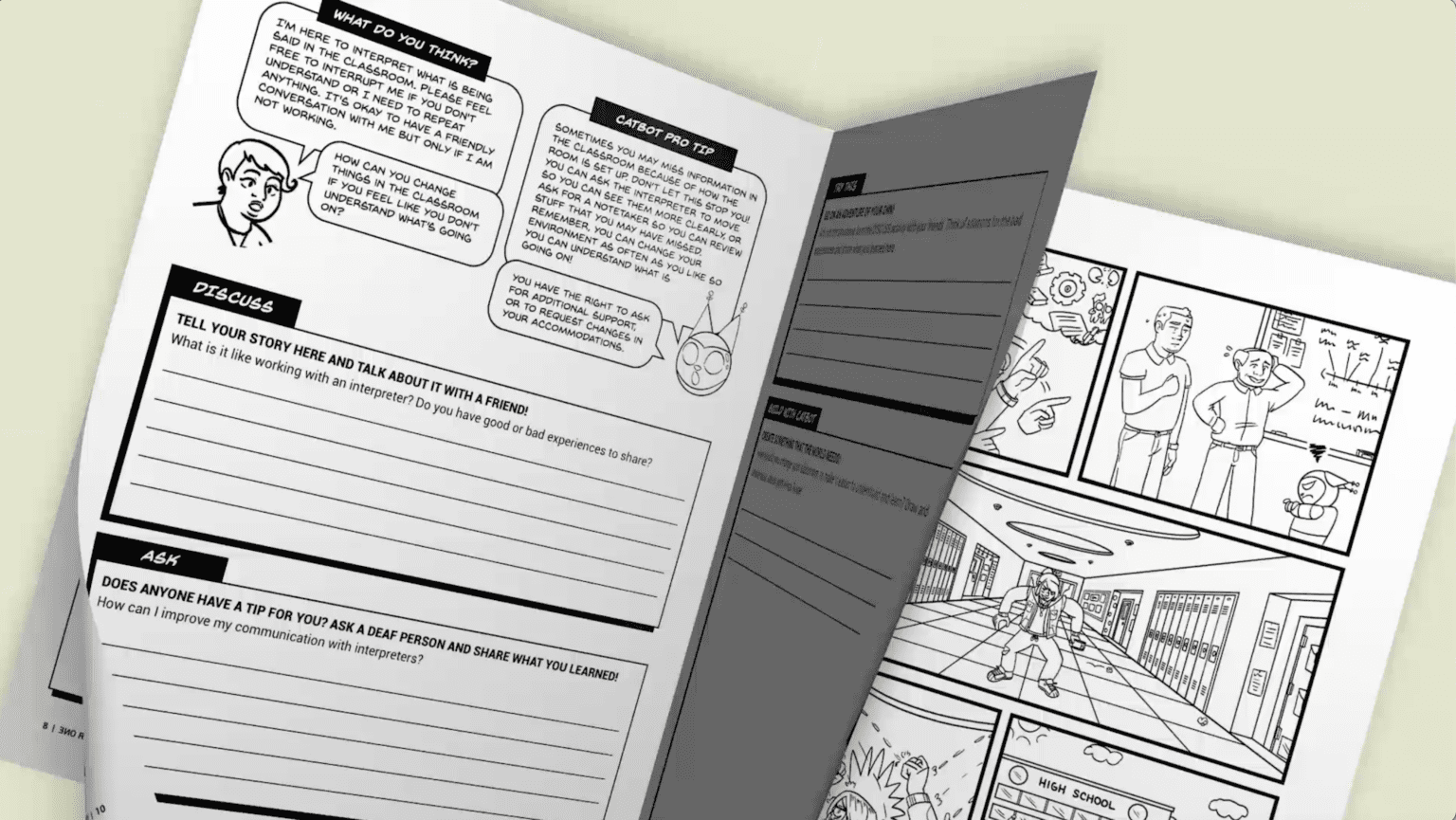
Last but not least, the World One: Duel of the Bots Teacher Strategy Guide is designed to help you prepare for your lesson plans by sharing information about the overall plot, learning objectives and their respective chapters, characters, and more!
Teachers React to Deafverse Classroom
In our latest focus group with teachers to test out Deafverse Classroom and the Strategy Guides, one teacher said that “… this feature definitely did make the career/college prep teacher here feel more motivated to give it a shot.”
Another teacher chimed in, “Yes. I plan on using it this year. I’ve already talked with my co-teacher about [how] we can incorporate it into our schedule weekly.”
Deafverse Classroom goes a long way in making the game easier to use in your classroom, and your fellow teachers agree on that!