How much do you know about deaf people? Whether you’re an ASL student, a teacher or coworker of a deaf person, about to hire a deaf employee, or just plain curious, it’s worth taking some time to understand what it means to be deaf and how to interact with deaf people. If only there was an easy course online somewhere. Look no further! The National Deaf Center on Postsecondary Outcomes (NDC) launched Deaf 101 today. Deaf 101 is a free online short course designed to provide basic knowledge and tools necessary to communicate effectively with deaf people, especially in educational and professional settings.
“Because deaf people are a low-incidence population, there’s typically a lack of knowledge among professionals about how best to work with them, said Stephanie Cawthon, PhD, Director of NDC. “Deaf 101 is about setting everyone up for success.”
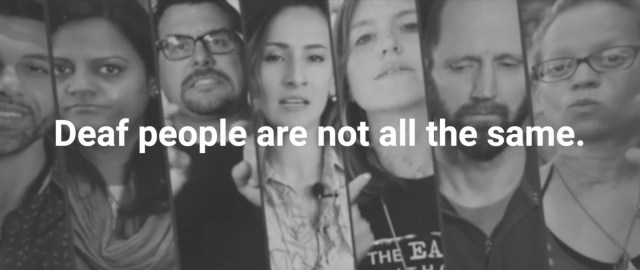
The course is broken down into two modules: the first describes the spectrum of deaf identity and answers common questions about deaf people; the second provides participants with quick tips and strategies to communicate effectively with deaf people.
Are you pressed for time? You can take the course all at once or in multiple sittings; it generally takes 3 hours to complete.
The course is designed to support a wide variety of people: ASL students & teachers, teachers of deaf students, as well as professionals working with deaf coworkers in the workplace and those working with deaf students in educational settings, such as counselors, transition specialists, disability service professionals and so on.
Deaf 101 helps participants to build knowledge and skills needed to:
- Describe different groups the term “deaf” may include
- Compare different terms used for deaf people
- Avoid common misconceptions about deaf people
- Promote positive attitudes towards deaf people
- Summarize the three federal laws that protect equal access for deaf people
- Use accommodations and other strategies that support effective communications between deaf and hearing people
In addition to Deaf 101, NDC offers families and professionals a full array of resources that support those working with deaf people, designed to empower people with the tools necessary to support #DeafSuccess. It also provides one-on-one help to families and organizations who need customized assistance or referrals.