


Have you ever seen decision-makers handing down mandates for deaf education and support services, and wondered why there were no deaf people in the room? Did you wonder why the top-down strategies they imposed did not work for the people they were trying to help?
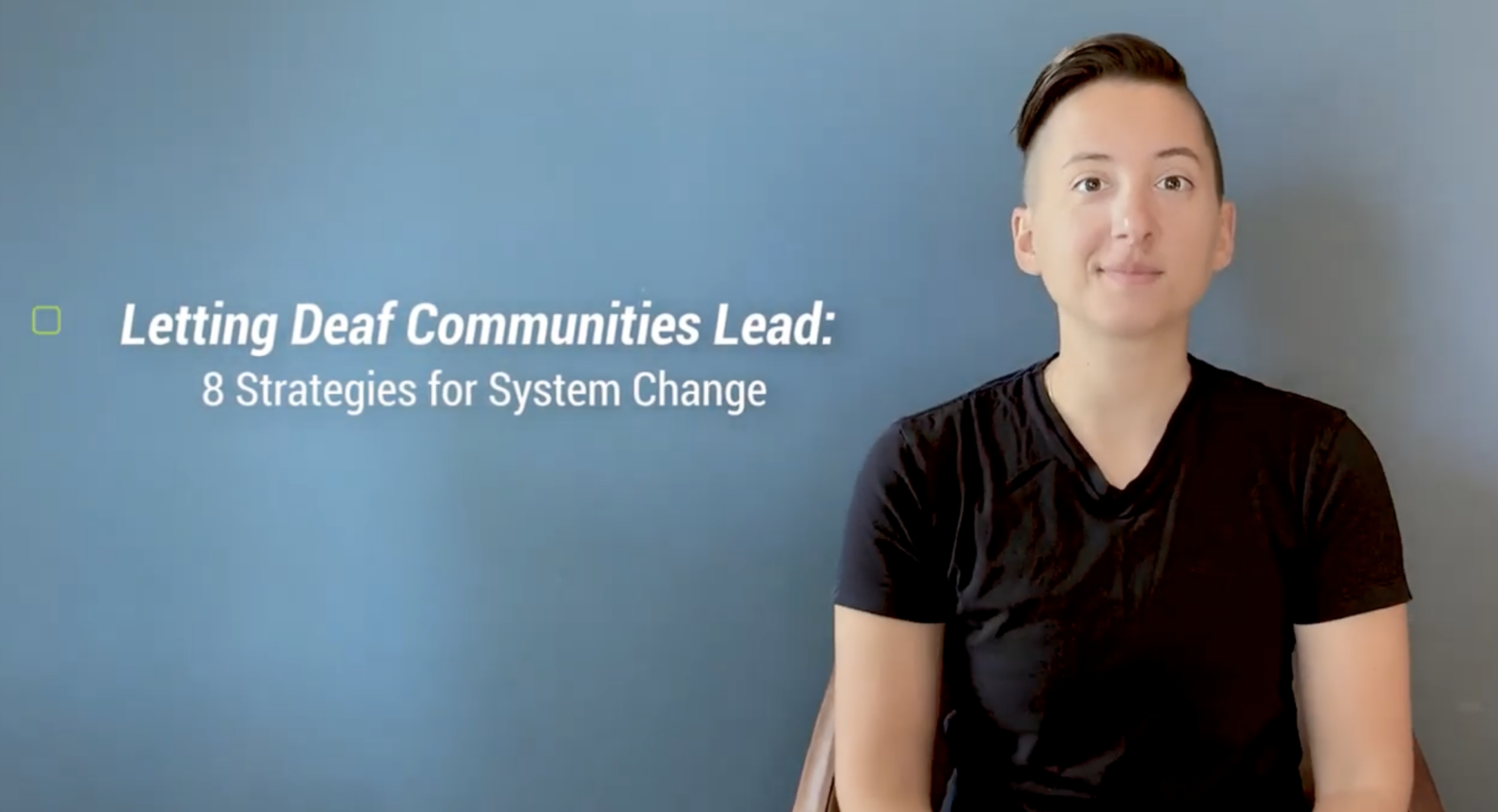
The National Deaf Center for Postsecondary Outcomes (NDC) works toward community- and deaf-led change through its Engage for Change | local program, and helps grassroots and local leaders build systemic change from the bottom up. Now, NDC is sharing eight strategies to help any group or organization follow the lead of deaf people to make real change.
For too long, deaf people have been left out of conversations about our lives,” said Carrie Lou Garberoglio, PhD, Associate Director of NDC. “Now, we have a framework for not only including deaf people, but letting them lead the discussion. These seemingly simple strategies can make a huge difference for deaf people’s education, careers and lives.”
Leading the Way: Eight Strategies for Deaf Communities to Enact System Change is based on a new research article published in the journal American Annals of the Deaf by Garberoglio, Diego Guerra, Genelle Sanders, and Stephanie Cawthon which summarizes what NDC learned from community conversations held across the nation.
Systems Change from the Ground Up
Current systems often put the burden on deaf youth to advocate for themselves in the face of weak support structures and failed policies — systemic issues that are the root causes of significant gaps in educational and employment success between deaf and hearing people.
This new approach shifts toward a model that keeps deaf people in the driver’s seat of their own lives, while maintaining the support they need to achieve their goals.
Building on input from deaf people and communities, the eight strategies provide a framework for creating programs and policies that remove barriers without limiting choices for deaf youth. This can be accomplished through better partnerships and resource sharing, stronger transition processes, improved access to programs and services, better support for families, and more.
More Resources and Support from NDC
NDC has a wealth of resources for community and educational leaders, disability support staff, families with deaf children and more. Get personalized advice and answers from the NDC | help team or subscribe to our newsletter and listserv for more.