

This year marks the 35th anniversary of the Americans with Disabilities Act (ADA), a landmark law that continues to shape access and opportunity for people with disabilities across the United States. Signed into law on July 26, 1990, the ADA helped break down barriers in education, employment, transportation, and daily life. It protects the rights of people with disabilities to attend school, get jobs, travel, and participate in their communities.
At the National Deaf Center on Postsecondary Outcomes (NDC), we are proud to support the ADA’s goals every day. Since our work began, we’ve helped thousands of schools, programs, and professionals reduce barriers for deaf students. We provide support to help people meet—and exceed—their responsibilities under the ADA.
Why The ADA Matters
Before the ADA, deaf people often had no way to request interpreters, speech-to-text services, or access public services. Being left out of classes, meetings, job interviews, and events was common—not because of ability, but because accessible systems didn’t exist.
The ADA helped change that. It protects the legal right to communication access and requires schools and employers to remove barriers and ensure access through appropriate services and accommodations. The law also helped raise awareness. More people began to understand what access really means—and how it affects the daily lives of millions of people.
NDC's Ongoing Commitment
NDC supports the goals of the ADA by helping schools and colleges create better access for deaf students. Our support gives professionals the tools they need to ensure deaf people are not left out. We know access is more than just following a rule—it means listening to deaf people, understanding their experiences, and designing systems that support success.
We help carry out the goals of the ADA by:
- Offering free resources that explain how to meet access needs and improve communication for deaf people
- Providing training and webinars to help staff understand their role under the law
- Answering questions from people across the U.S. and Territories and consulting 1:1 about ADA responsibilities and real-world solutions
- Centering deaf experiences and sharing what true access means
A Deaf Role Model in Action
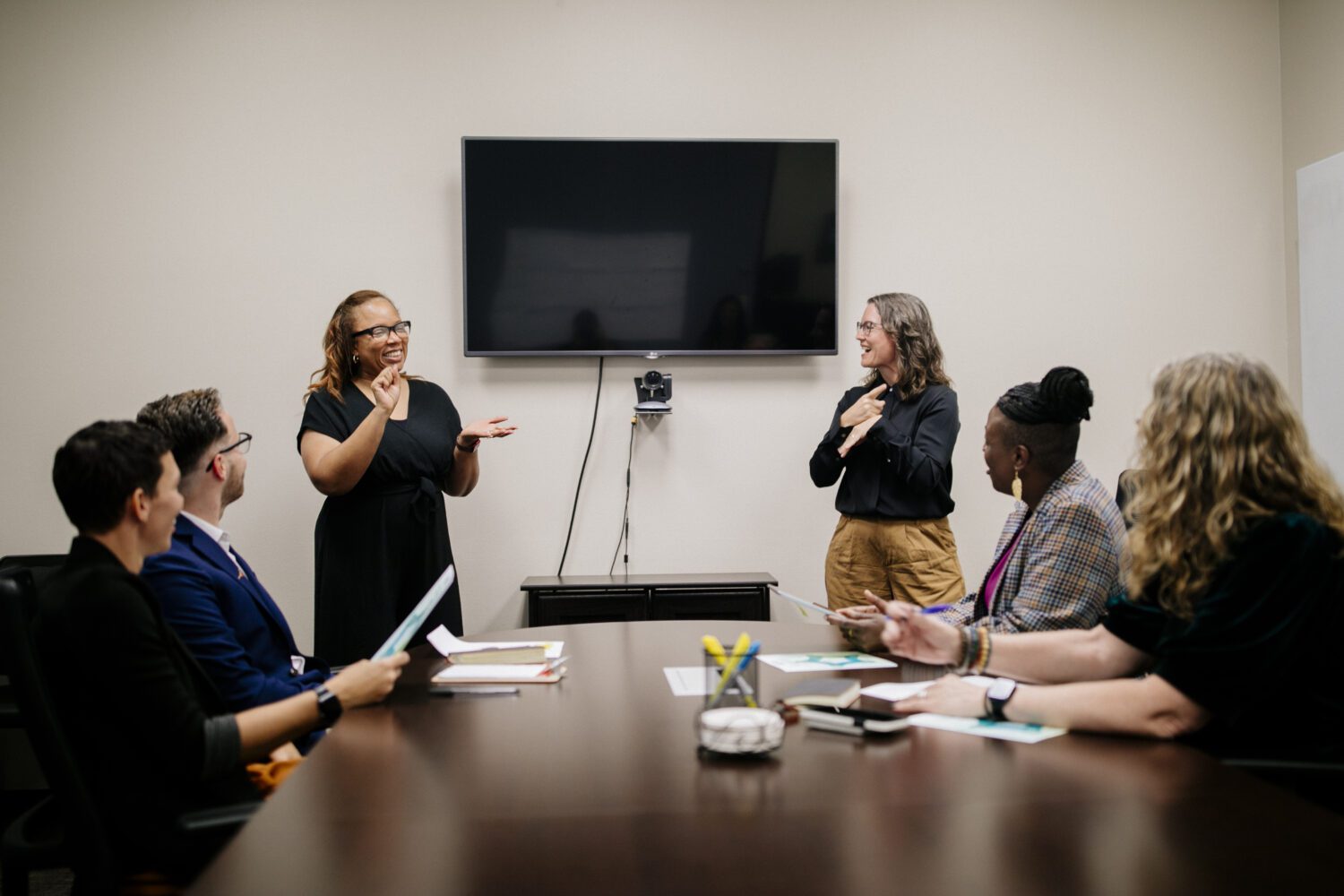
To honor this milestone, NDC is sharing stories that show how far we’ve come. One of them features Elise Knopf, a deaf woman who worked in U.S. Senator Tom Harkin’s office while the ADA was being written and debated. In our Deaf Role Models video, Elise shares what it was like to be part of this historic moment and how being deaf gave her a unique perspective. Her story reminds us that real change often starts with everyday people who speak up. Even one person can help move a big idea forward.
“During the creation of the bill, a bulk of the work was ensuring that the right language was used. Certain groups had their strongly held beliefs as to what they wanted to include in the ADA. Of course, we had disability rights advocates protesting and making statements to tell people why we needed the ADA. It was quite something to be a part of. I learned so much. I developed great empathy for diverse groups of people with disabilities.”
Elise Knopf
The ADA's Positive Impact Continues Today
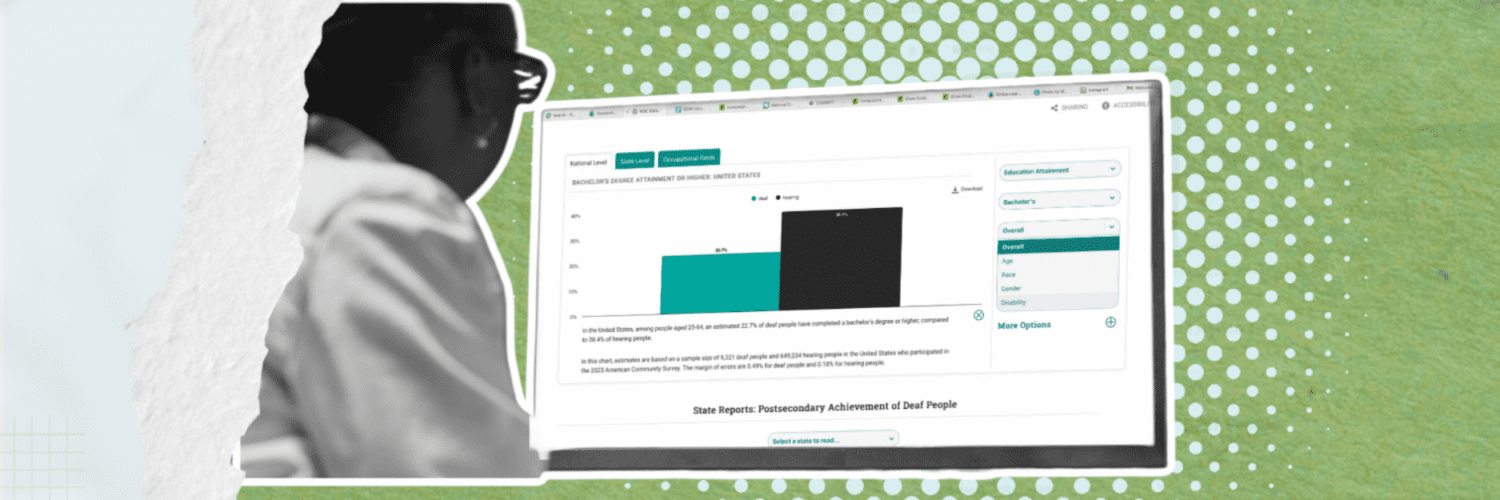
The ADA opened the door to progress—but attainment gaps remain, because data continues to reflect disparities in both education and employment for deaf people. Many deaf people still face barriers at school and work because systems weren’t designed with access in mind. Lack of captioning, untrained staff, and poor planning are still common. The ADA remains essential to protect rights and push institutions to provide equal access. That’s why NDC’s work is more important than ever.
NDC resources help schools, colleges, and workplaces meet ADA requirements and take meaningful steps to improve access for deaf people. Our guidance is shaped by the real experiences of deaf individuals and supports long-term changes that make education and work more accessible and welcoming. The ADA was created to protect the rights of people with disabilities and hold systems accountable, but progress requires more than a law. NDC’s mission to improve postsecondary outcomes for deaf people supports the goals of the ADA by helping schools and programs build environments where deaf people can fully participate. Our work is grounded in values like accountability, informed decision-making, and community-driven change
We also partner with national organizations and state agencies to drive systems change and improve outcomes for deaf people. Need help with ADA compliance or making your campus more accessible? Contact our Help Team at help@nationaldeafcenter.org.