Across the country, colleges rely on Disability Services (DS) offices to ensure students with disabilities have the tools and accommodations they need to succeed. Yet one fact remains hard to ignore: very few deaf professionals work in these offices.
For those who do, the job can be as isolating as it is rewarding. Many end up leaving after only a few years—worn down by the same access barriers they are tasked with solving for others. Deaf professionals often encounter the same systemic challenges that students do: arranging interpreters, managing last-minute changes, or advocating for communication access in spaces where it should already exist.
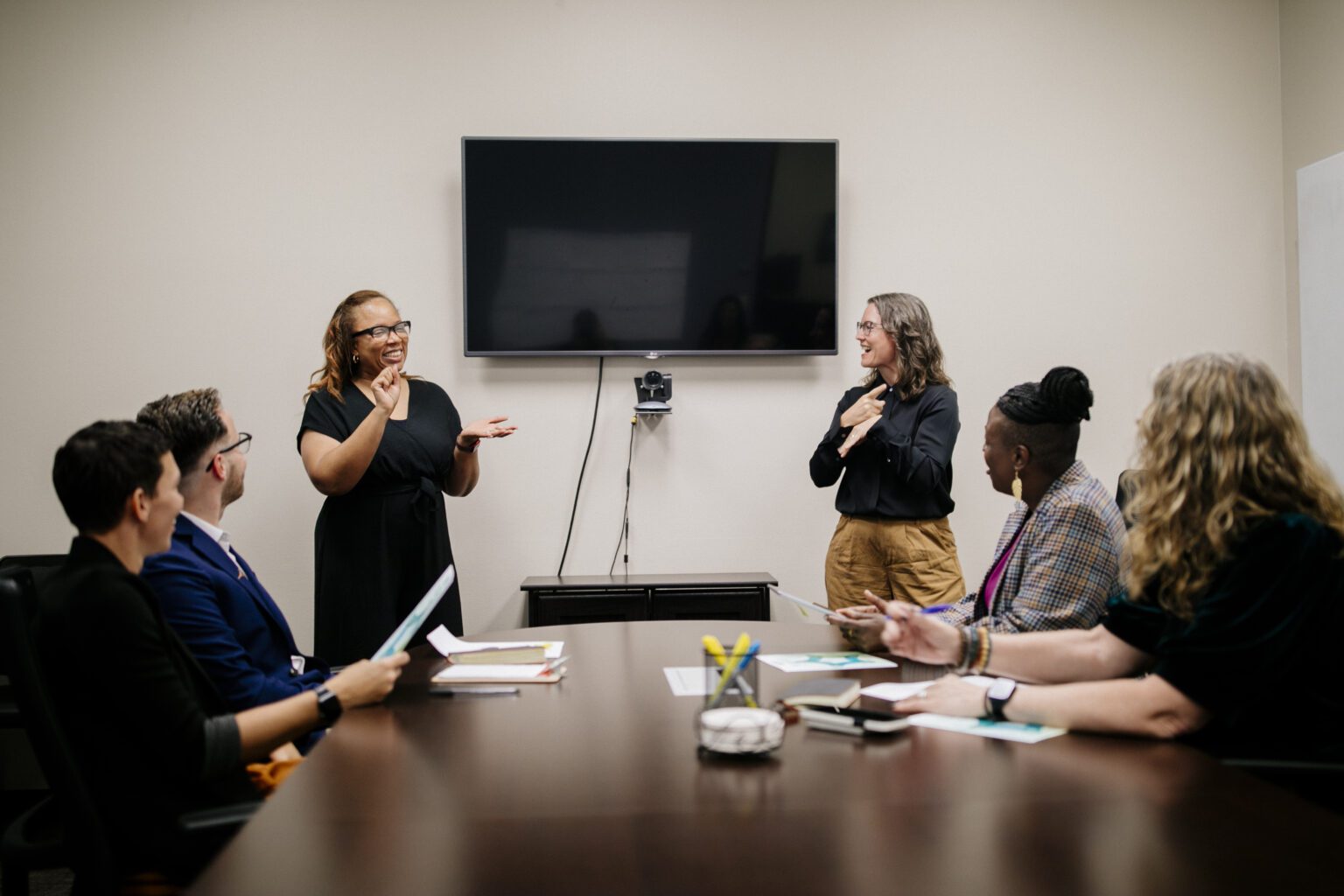
The meeting had already started by the time the interpreter’s Zoom window appeared on the screen. It wasn’t the first time. For one deaf DS professional, access was never a given—even in a department built around access. She had spent weeks coordinating interpreters and captioning for deaf students. But when it came to her own meetings, there was often no time, no funding, or simply no one who remembered to make arrangements.
This experience isn’t unique. Many deaf professionals face what’s often called the deaf tax—the extra time, energy, and emotional labor required to navigate workplaces that weren’t built with them in mind.
“For a deaf person to go into those [hearing-centric] environments, you're having to go in and make adjustments to accommodate yourself simply to be able to function. There are barriers; you have to educate before changes are able to happen.”
- Rian Gayle, Director, Disability Services, Western Oregon University
Access for Students, But Not for Staff
In most colleges, Disability Services offices are where students go to find solutions for access barriers. But for many deaf professionals who work in those very offices, access is still something they have to fight for.
They’re often left navigating the same systems they help students overcome—meeting changes announced without interpreters, inaccessible professional development sessions, or captioning requests that fall through the cracks.
“That’s another part of the deaf tax. We suppress our feelings just to power through every day. After continuously facing barriers, it’s understandable that deaf people are completely worn out. It’s lonely, it’s isolating.”
- Rian Gayle
Burnout follows when access is treated as a personal challenge rather than an institutional commitment. Hiring deaf professionals in disability service roles is just a step forward, and retaining them requires institutional leadership to uphold access as a shared responsibility built into everyday practice.
Without that commitment, campuses lose more than employees—they lose the expertise that could transform how access is designed and delivered, and the lived experience that makes those systems work.
Why Deaf Professionals Matter
The answer is simple—deaf professionals make services more effective, accessible, and impactful for deaf students.
According to the 2024 AHEAD Biennial Survey Report, only 9 percent of DS professionals identified as deaf or hard of hearing. NDC’s own Disability Services Report found a slightly higher figure—17 percent—but both point to the same reality: deaf professionals remain underrepresented in this field.
Their expertise isn’t theoretical. It’s lived. Deaf professionals know how accommodations actually work in practice—how to plan interpreters, prepare captioning, and anticipate communication breakdowns before they happen. Their insight aligns directly with the AHEAD Program Competencies: effective communication, cultural awareness, and proactive access planning.
When DS offices hire and retain deaf professionals, they don’t just diversify staff—they improve service quality. Deaf professionals save time, reduce misunderstandings, and strengthen relationships with students through shared lived experience. They bring cultural fluency, nuanced understanding of accommodations, and a direct line to student trust.
The Ripple Effect on Campus
The absence of deaf professionals doesn’t just impact staff—it weakens the foundation for deaf students’ success.
As Lore Kinast, Strategic Support Co-Director at the National Deaf Center and a former Disability Services Coordinator, reflected:
“Because I was once a deaf college student myself, I know how powerful that lived experience can be. It helps me meet students where they are and support them in ways that truly reflect their needs.”
That connection matters. Deaf professionals model what an affirming environment looks like—where access is normalized, not negotiated. Their presence strengthens what NDC’s Deaf Postsecondary Access and Inclusion Survey (DPAIS) calls campus connectedness and a deaf-affirming climate: conditions where deaf students feel recognized, supported, and part of the community.
When deaf professionals leave, institutions lose more than staff—they lose knowledge, trust, and continuity. Students lose mentors who understand them not just academically, but culturally.
“I have yet to work in an environment where accessibility is fully integrated and where signing is the norm. That has not happened yet.”
-Vanessa Molina, Doctoral Student and former Assistant Director, Disability Services Office
A System That Reflects Its Own Gaps
Even within DS offices, hiring and workplace practices often remain inaccessible. Job postings may require phone communication. Interviews may lack interpreters. And assumptions still persist that accommodating deaf staff is “too expensive.”
“We’re often pressured not to use the things that give us the fullest access because of cost and logistics—and that keeps people from being who they are and expressing themselves fully.”
- Allen Sheffield, Director, Resource Center for Persons with Disabilities, Michigan State University
“If this were any other office, it might be understandable—but this is Disability Services. You would expect there to be an understanding.”
-Vanessa Molina
These are not small inconveniences—they are structural barriers that communicate that access is negotiable, not guaranteed.
When deaf professionals are left to arrange their own access, they bear a cost that institutions should be sharing. And when institutions fail to create accessible workplaces, they lose the very professionals who can make their services stronger.
Moving From Awareness to Action
The message to the field is clear: DS offices need to be more deaf-friendly—not just for students, but for staff.
Hiring a deaf professional shouldn’t be the finish line—it’s the starting point for real change. When deaf professionals thrive, their expertise amplifies what DS offices can achieve and models the type of accountability that students deserve to see.
Creating workplaces where deaf professionals thrive isn’t just an accessibility goal—it’s a strategic investment. When DS offices prioritize accessible systems for their own staff, they model the culture of accountability, care, and communication that every student should experience. It’s a vision worth striving for: a higher-education system where deaf people lead, shape, and redefine what access means for everyone.
“We need more disabled professionals. It is a critical component—I’m not saying that everybody in the field needs to be deaf or disabled, but we do need them. The voices are important. Nothing for us, without us.”
- Allen Sheffield
When colleges recognize the value of deaf professionals, everyone benefits: students receive stronger support, offices run more efficiently, and campuses move closer to true access—not just compliance.
📣 Call to Action
For DS Offices:
- Evaluate whether your office models the same level of access you promise students.
- Build policies that make access predictable, not optional.
- Recruit and retain deaf professionals—they bring the expertise your programs need.
For Deaf Professionals and Students:
Thinking about a career in Disability Services? Your perspective matters.
Contact the National Deaf Center to learn more.
Explore open roles in Disability Services via Higher Ed Jobs and Chronicle Careers.