
Home » Resources » Access & Accommodations » Creating Welcoming Campuses » Work Experiences » Campus Career Services
Campus Career Services
Strengthening Career Outcomes for Deaf Students
Deaf college students face barriers to achieving career outcomes, even when they participate in internships and career services. Disabled graduates are also less likely to find jobs aligned with their field of study. To change this, career centers and disability services must work together to ensure access and build stronger connections among students, employers, and the campus community.
Deaf College Students Who Participated in a Small NDC Study Told Us:
- They had limited engagement: Only 69% of deaf college students have interacted with career services.
- They have accessibility concerns: 45% of students who visited career services more than once rated accessibility as poor to fair.
- There are barriers to internships: Most internships reported by deaf students are on-campus, suggesting a lack of off-campus opportunities or employer reluctance to provide accommodations.
What Deaf Students Need:
- Guidance on self-advocacy in the workplace
- Information on disclosing their disability to employers
- Dedicated career center resources focused on disability employment
By addressing these areas, colleges can better support deaf students in navigating career paths and fostering more welcoming opportunities.


“Be proactive, yes students have a responsibility to reach out, but all involved have a part too in making the student feel like they ‘belong’ and in getting them the best educational experience possible.”
– Emmanuel Perrodin-Njoku
Best Practices for Serving Deaf Students in Career Services
The practices below reflect high-impact strategies that go beyond accommodations: they focus on building relationships, embedding accessible practices, and creating systems that prepare all students for success.

Career services and disability services offices serve students best when they operate as collaborative partners — not silos.
- Establish regular collaborative events to increase mutual understanding about services available and clarify referral pathways.
- Appoint a liaison between the two offices to streamline coordination and deepen rapport; ideally, this role is filled by a person with a disability who brings both lived and professional insight. Ensure staff in both offices are trained in the basics of Deaf culture and in best practices for supporting deaf students.
- Use voluntary release forms so students can give permission for staff to coordinate support across departments while maintaining privacy and choice.
- Host deaf student panels to allow peer information sharing of experiences with career services and disability services while building a sense of community.
Accessibility is not just about accommodations — it’s about designing every touchpoint with everyone in mind.
- Advertise events with clear instructions for requesting accommodations, and ensure services like ASL interpreting or captioning are available (e.g., University of Kansas).
- Design fully accessible events that include interpreters, captions and visually accessible materials.
- Create a dedicated student-facing webpage with resources, FAQs, and contact information about career support for disabled students (e.g., Rochester Institute of Technology).
- Develop a resource hub for employers with information on hiring practices, accommodations, and the value of disability-accessible workplaces (e.g., Landmark College).
- Extend access to career services post-graduation — especially important for students who may need additional time to secure employment (e.g., UC Berkeley).
Deaf students are experts in their own experiences — their feedback should shape programs and policies.
- Host listening sessions or advisory boards to gather insights about student barriers, needs, and goals. These feedback loops are critical and develop students personally and professionally. See this NDC resource to learn more about student advisory boards.
- Gather and use data to track access, participation, and post-graduation outcomes — and use findings to inform programming.
- Embed disability-specific support and self-advocacy into coaching and workshops to help students navigate disclosure, negotiation, and job search challenges with confidence.
Career preparation is stronger when students are connected to real-world networks and opportunities.
- Launch a disability employment task force that includes employers, alumni, and the campus community to strengthen career services and align with workforce trends (e.g., University of Michigan IDEA Committee).
- Partner with employers in key sectors to create accessible internships, apprenticeships, and co-ops — especially when integrated into students’ academic programs.
- Showcase examples of employers trained to work effectively with deaf employees (e.g., through programs at Gallaudet University).
- Coordinate with Vocational Rehabilitation agencies to support job coaching, personal assistants, or other employment supports (especially for students with additional disabilities).
- Encourage faculty and alumni mentorships to strengthen students’ professional networks and provide industry insight. Deaf mentors are a great way to allow students to feel supported and seen in these experiences!
- “Through direct communication and lived experience, they equip Deaf students with the tools and confidence needed to pursue advanced degrees and succeed in predominantly hearing professional environments. This mentorship fosters not only academic growth but also long-term career readiness.” (Listman, 2013)
- Adopt NACE Career Readiness Competencies as a shared framework to deepen industry-specific student preparation and set consistent expectations.
Disclosure is when a deaf person shares their disability and access needs to ensure they have the accommodations to fully participate in the employment process. Disclosure might include access needs for career fairs, networking events, interviews, employer site visits, or training sessions. This step is important but often sensitive, due to disability-related stigma and concerns about the perceived cost of accommodations. The decision of when, how, and what to disclose—such as the need for interpreters, speech-to-text services, specialized equipment (e.g. captioned phones), or other communication supports—can vary widely based on the context, environment, and level of trust.
Disclosure is not one-size-fits-all. For deaf students,
Things to consider:
- Some students may choose to disclose early to ensure interpreters or captioning are scheduled in time.
- Others may wait until they feel safe, welcomed, or confident that their access needs will be taken seriously.
- Disclosure may involve not just stating “I use ASL,” but also specifying interpreter preferences (e.g., deaf/hearing teams), placement in the room, or preparation materials for interpreters.
- Students may request technology support such as speech-to-text services (such as CART), captioned phones, video relay services, or assistive listening devices.
- In virtual settings, students may clarify whether captions, interpreters, or platform accessibility features are available.
- Students may specify communication preferences that change by context—for example, using ASL in one setting and preferring written communication in another.
- Timing and privacy matter: disclosure may look different at the application stage, during an interview, or after being hired.
It’s important for career services and employers to:
- Avoid pressuring students to disclose early or publicly.
- Create access-forward environments where support services are clearly communicated, making disclosure feel like a choice—not a requirement for basic access.
- Acknowledge that interpreter logistics are complex, and advance planning is critical for ensuring participation.
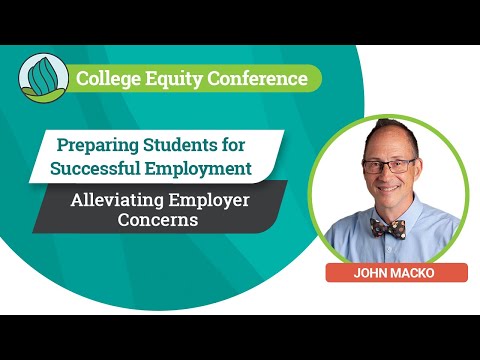
“It is critical to have a good solid relationship with various employers. Invite employers to come to campus [and] invite some of the Deaf students or visit their classes and explain to [employers] what programs are available, or would apply to their work.”
John Macko, Director of National Technical Institute for the Deaf Co-op and Career Center
Career Services Resources for Students
Deafverse World 2: Revenge of the Deep
Deaf-Focused Job Boards
Did you know that there are job boards specifically for deaf jobs? Check them out below!
PROFESSIONAL DEVELOPMENT
Deaf 101
This free one-hour self-paced learning module provides participants with resources to better understand the variety of backgrounds and perspectives within the deaf community—highlighting that there is not one single deaf community, but many. The module explores the different ways deaf people describe and experience their identities, sharing personal stories to illustrate these differences. It is designed for anyone interested in learning how to engage with deaf people more effectively.