Determined to provide vital transition services for deaf youth despite a global pandemic, 45 leaders in education and vocational rehabilitation (VR) from 25 states gathered online on May 28 for a special event, “Transition Planning in the Time of COVID-19,” organized by the Engage for Change | state team at the National Deaf Center on Postsecondary Outcomes (NDC).
Hailing from Alabama to Wyoming, the leaders focused on sharing solutions, finding opportunities, and overcoming challenges that range from technology and access barriers to increased mental health issues among students.
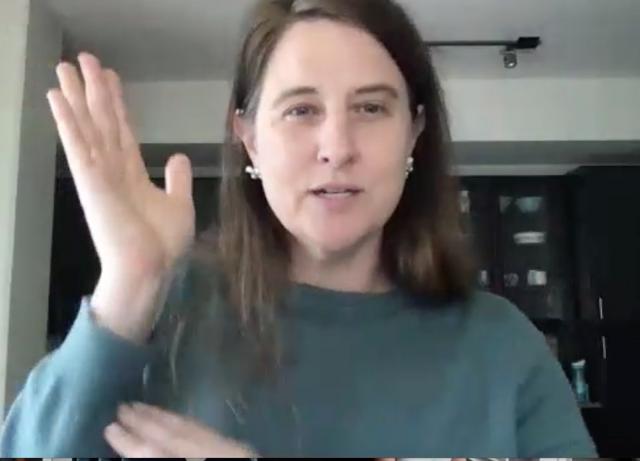
The event’s opening remarks were delivered by NDC Director Stephanie W. Cawthon, PhD, who advised state leaders to think about transition holistically — to approach young people preparing for life after high school not with a checklist, but with a “design for life” approach.
“Now more than ever, we need to think about transition holistically, to provide tools and strategies to young deaf people that they can use throughout the different phases of their lives,” said Dr. Cawthon, citing her recent keynote address, Raising the Bar for Postsecondary Success, about how transition can be a design for life that embraces the transformational powers of high expectations and self-determination.
State Leaders Grapple With Common Themes
As state leaders connected and collaborated during breakout sessions, several themes emerged:
-
Technology and access are huge barriers. From unstable internet connections to moving almost everything — in-person programs, service delivery, IEP processes, evaluations, and events — online in accessible ways, technology is a challenge every state is facing. A few shared they have cancelled most activities and are just in survival mode.
-
Families are at the forefront. State agencies are helping families gain access to technology to support their child’s learning at home. As teachers have had to focus on the rapid shift to online learning, families are playing a greater role in transition planning and connecting with VR services. It’s a big learning curve for many hearing families, who don’t have a deep understanding of their deaf child’s needs. Michigan hired a parent liaison before COVID-19 hit, a new role that is now critical for connecting with families.
-
Mental health issues are significantly increasing. Some students are very worried and anxious about returning to school. Other youths are depressed about being confined to home and away from their peers. One state is shifting focus from transition to mental health and core academics. Indiana has more than 600 people participating in a program to connect students with friends online.
Different Approaches for Future Programs
Summer programs that strengthen self-advocacy for deaf youth are a key state activity, and the pandemic has changed how many will happen this summer. Minnesota, Maine, and Virginia are adapting their programs to go online. Idaho is using a hybrid approach, with online work readiness training and socially-distanced in-person work experiences. Utah still has in-person summer camps planned, with smaller sessions and stringent safety measures.
When polled at the event about future Engage for Change | state plans, 72% of attendees want more discussion about accessibility and distance education strategies, 67% want to know how to provide remote Pre-Employment Training (Pre-ETS) services, and 72% want regional meet-ups for further collaboration.
About EFC | state
Engage for Change | state brings leaders from state-level education and vocational rehabilitation agencies together to close gaps in education and employment for deaf people. Through networks of shared leadership and peer support, state leaders tap NDC’s support and resources to create an exchange of ideas and collaboration that would otherwise be impossible. Managed by State Engagement Coordinator Jen Higgins, Engage for Change | state is committed to systems change and promoting #DeafSuccess.