Maestros, esto es para ustedes tú.
Si "planificación de la transición" ya está en tu mente de regreso a clases, no estás solo. Entre las reuniones del IEP, las metas del estudiante, las adaptaciones, la preparación para el trabajo, la autoabogacía y las conversaciones sobre la vida después de la escuela secundaria, puede parecer mucho para reunir.
Y las apuestas son reales. Hay aproximadamente 280,000 jóvenes sordos en los Estados Unidos entre las edades de 16 y 24 añosAlrededor del 22,7% no están actualmente inscritos en la escuela ni trabajando. Eso es aproximadamente 64,000 jóvenes sordos. Ese número no tiene que ver con la habilidad. Es un recordatorio de que el acceso, la preparación, el apoyo y la planificación de la transición son importantes antes de que los estudiantes abandonen la escuela.
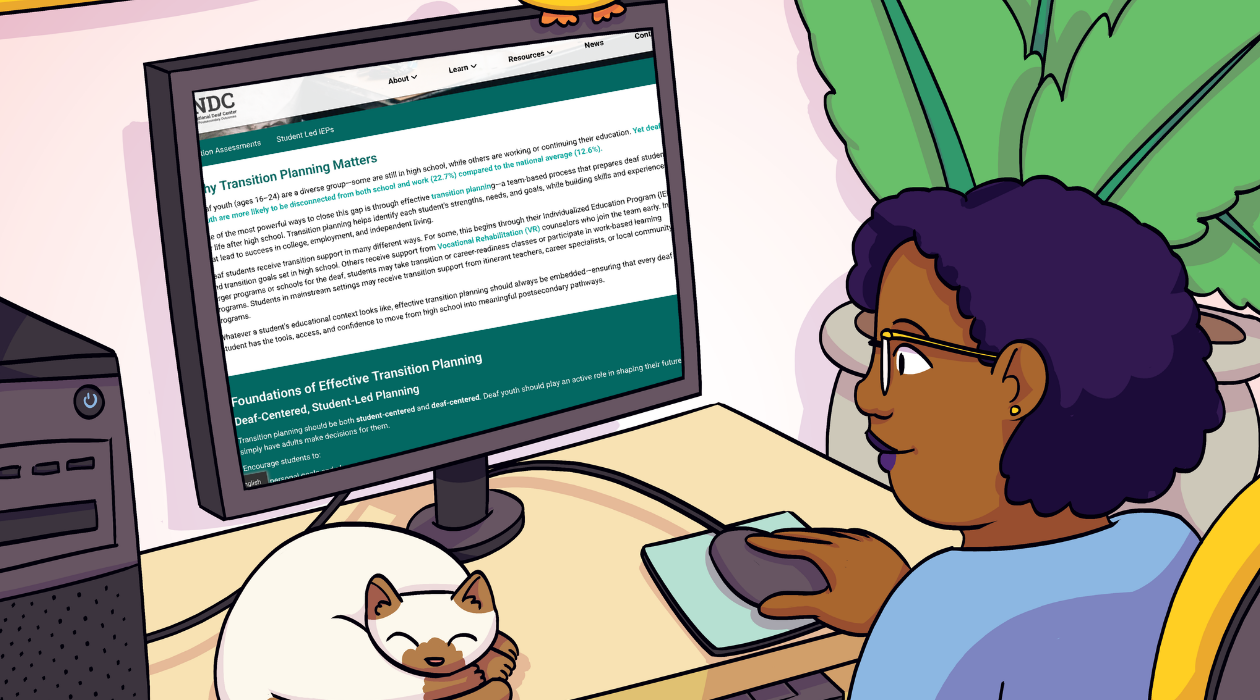
Así que aquí tienes tu atajo: Planificación de la transición de NDC para jóvenes sordos página.
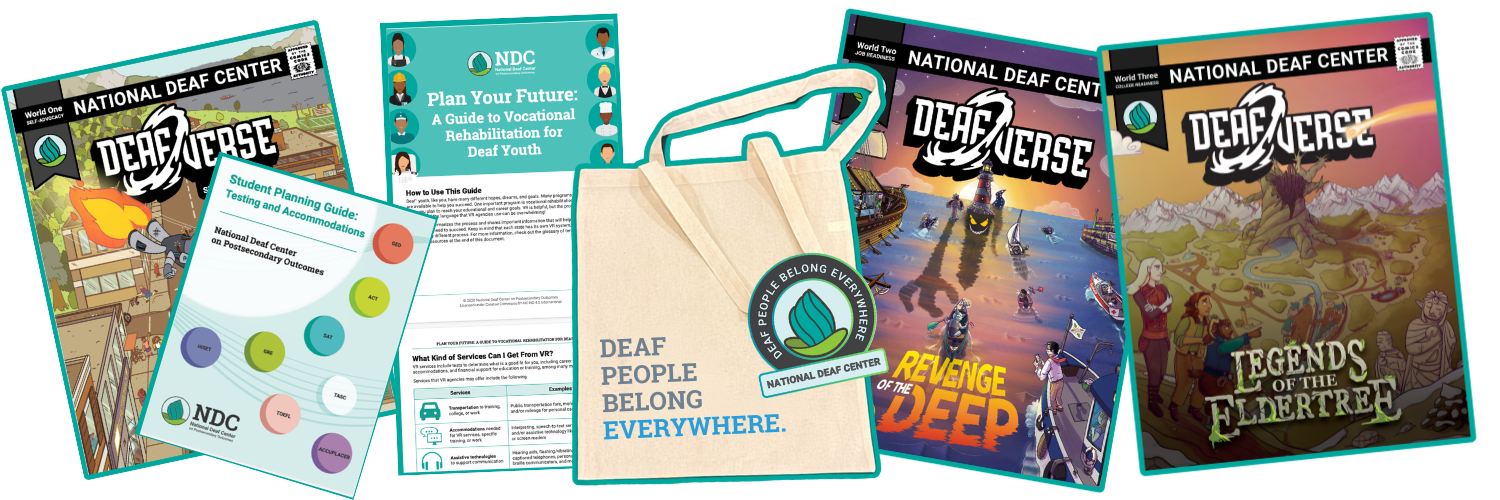
Kits de regreso a clases
Actualización: Los kits de regreso a clases están completamente reclamados — ¡gracias por una respuesta increíble! Cada recurso del kit es gratuito para descargar, y esperamos que los kits impresos regresen este otoño.
Descargar materiales de regreso a clases
Aquí es donde comenzar antes de que el año escolar se vuelva ocupado:
-
¿Necesitas el punto de partida general? Comienza con Planificación de la transición de NDC para jóvenes sordos.
Esta página te ofrece un lugar para comenzar. Reúne herramientas para ayudar a los estudiantes sordos a prepararse para la universidad, carreras, capacitación y la vida después de la escuela secundaria, sin que tengas que buscar en una docena de pestañas. -
¿Quieres fortalecer tu comprensión de los jóvenes sordos? Toma el Microcertificado de Éxito para Jóvenes Sordos.
Esta oportunidad gratuita de desarrollo profesional ayuda a los educadores a vincular el acceso con la participación de los estudiantes, la autodeterminación y los resultados a largo plazo. En otras palabras: no solo "¿Proporcionamos alojamiento?", sino "¿Están los estudiantes realmente preparados para lo que viene después?" -
¿Quieres que los estudiantes dejen de ser objeto de conversación y empiecen a liderar? Explora Recursos de IEP dirigidos por estudiantes.
Estos recursos ayudan a los estudiantes a desarrollar las habilidades para entender sus metas, compartir lo que necesitan y asumir un papel más activo en las reuniones que moldean su futuro. La planificación de la transición no debe centrarse en torno a los estudiantes. Debería sucederles a ellos. -
¿Preocupado por las adaptaciones para las pruebas? Mantén el Guía de Pruebas cerrar.
Las pruebas pueden plantear muchas preguntas sobre el acceso: adaptaciones, documentación, necesidades de comunicación, tiempos y lo que realmente funciona para cada estudiante. Esta guía ayuda a los equipos a reflexionar sobre esas preguntas antes de que el día de la prueba se vuelva estresante. -
¿Quieres que los estudiantes practiquen decisiones de la vida real, no solo que hablen de ellas? Traer Recursos para docentes de Deafverse.
Deafverse Convierte la autoabogacía, la preparación laboral y la preparación universitaria en aprendizaje interactivo. Los estudiantes pueden practicar opciones relacionadas con alojamiento, intérpretes, entrevistas de trabajo, currículums, solicitudes universitarias, ayuda financiera y vida en el campus. Los maestros pueden usar guías de estrategia, actividades en el aula, vocabulario, resúmenes de historias y herramientas de cuenta en el aula para relacionar el juego con los objetivos de transición.
Comienza con un recurso. Compártelo con tu equipo. Envíalo al maestro que está al final del pasillo. Guárdalo para la próxima reunión del IEP.
Sabes que lo necesitarás.